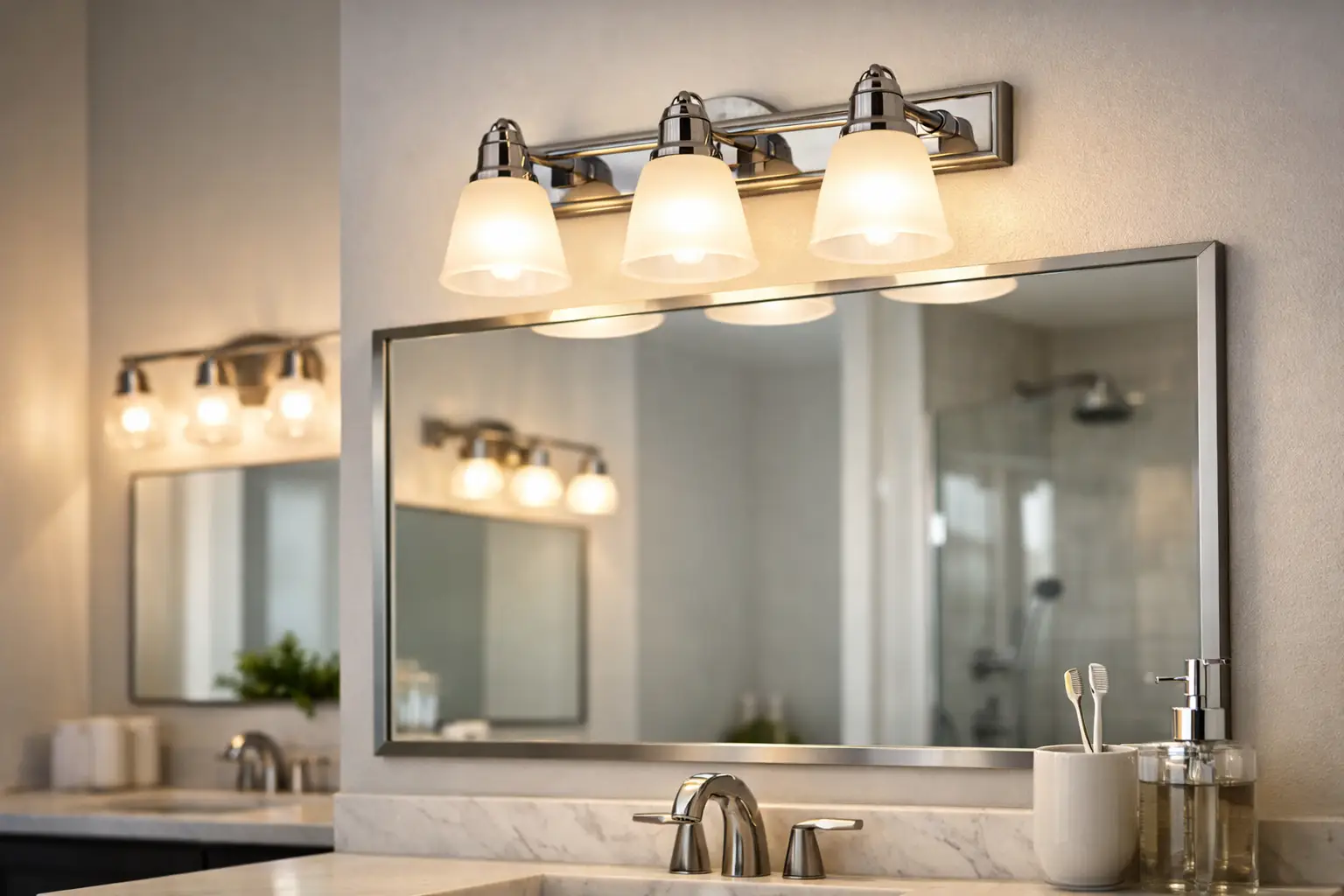
A vanity light can quietly wreck a bathroom budget in two ways – it either looks cheap the second a buyer walks in, or it burns labor time because the install details fight the rough-in. That is why a contractor grade vanity lighting review matters more than most finish decisions suggest. In builder baths, flips, and rental turns, the right fixture has to balance speed, durability, finish consistency, and enough visual lift to make the room feel intentional.
This category gets misunderstood. “Contractor grade” is often used as shorthand for low-end, builder-basic, and disposable. In practice, it covers a wide range. Some fixtures are genuinely bare-minimum placeholders. Others are smart workhorse specs that install fast, survive punch lists, and still photograph well enough for listings and client presentations.
What contractor grade vanity lighting really means
In most projects, contractor grade means a fixture built for repeatability. It is usually stocked in volume, priced to fit multiple-unit or tight-margin work, and designed to reduce decision fatigue. You will typically see simpler silhouettes, standard mounting hardware, common widths like 18, 24, and 36 inches, and finishes that align with broad market demand such as matte black, brushed nickel, chrome, or soft brass.
That does not automatically mean poor quality. It means the product is optimized for scale. For builders, that helps with procurement and schedule control. For designers, it can create a reliable baseline in secondary baths while leaving room to spend more in the primary suite or powder room. For investors, it is often the difference between a bathroom refresh that pencils out and one that eats into margin.
Contractor grade vanity lighting review – where value shows up
The strongest options in this category tend to win in four areas: install time, replacement simplicity, durability, and visual neutrality. If your electrician can mount the same backplate pattern across several units, labor gets cleaner. If the glass shade is common and easy to replace, maintenance gets easier. If the finish hides fingerprints and hard-water spots, the bathroom shows better for longer.
Where many specs fall apart is light quality. A fixture can look acceptable on a shelf and still cast harsh shadows on the face, which buyers notice even if they cannot explain why. Cheap integrated LED boards are another common weak point. They promise long life, but when they fail early, you replace the whole fixture instead of a bulb. That may be fine in a luxury custom bath with a statement piece. It is less appealing in a scattered-site rental portfolio.
Performance categories that matter on real jobs
Light output and color temperature
For most vanities, the fixture needs to support grooming without making skin tones look gray or yellow. In practical terms, 2700K to 3000K works best for warmth without feeling dim. Many flippers lean too cool because 4000K reads “bright” in a box store aisle. In a finished bathroom, that often feels clinical and can flatten the room.
Output depends on bath size and mirror width, but the bigger issue is distribution. Frosted diffusers or well-designed opal glass will soften light better than clear exposed bulbs. Clear glass can look more elevated, especially in transitional or industrial bathrooms, but only if the bulb selection is right. Otherwise you get glare, visible hot spots, and a fixture that photographs harder than it should.
Finish quality and consistency
Finish consistency matters most when you are sourcing multiple baths or matching existing hardware packages. Matte black remains a safe bet for flips and modern builder stock because it gives contrast and hides minor wear. Brushed nickel still earns its place in broad-market projects because it is forgiving and pairs with almost anything. Brass tones are trickier. They can add value, but lower-cost versions often vary batch to batch or skew orange under bathroom lighting.
If your project includes mirrors, faucets, and shower trim from different vendors, check undertones before final spec. A warm brass vanity light next to a pale champagne faucet can look like a miss, not a design choice.
Installation realities
This is where a good spec saves real money. Look for fixtures with generous canopies that cover rough-in imperfections, straightforward mounting brackets, and enough wire room in the backplate. Tight housings are common in low-cost fixtures and can turn a 20-minute install into an aggravating hour.
Weight also matters. Heavier glass and metal components can feel premium, but if the mounting system is flimsy, the fixture may not sit level. On multi-unit jobs, that becomes a repeat labor issue. The best contractor-grade choices are not always the cheapest. They are the ones that install predictably across every bathroom in the schedule.
Serviceability
Bulb-based fixtures still have an edge in many pro settings. They make future maintenance easier, especially for rentals and properties outside your immediate market. Integrated LED can look cleaner and cut profile depth, but it pushes risk into the long term. If the diode driver fails, replacement is rarely elegant.
For investor projects, serviceability is part of ROI. A fixture that costs slightly more up front but avoids a full swap two years later can be the better number.
Which styles perform best by project type
For builder-grade new construction
The safest play is a clean linear bar in black, nickel, or chrome with frosted shades or an acrylic diffuser. This style covers a wide range of buyer tastes, works in standard hall baths, and keeps install straightforward. It will not headline the room, but that is often the point. You want broad appeal and easy replacement.
For flips aiming above entry level
This is where decorative contractor-grade fixtures can outperform expected value. Think globe lights, cone shades, or a simplified hotel-style profile in a richer finish. Buyers notice bathroom lighting because it sits at eye level. A slightly better fixture can make the vanity, mirror, and tile feel more expensive than they are.
The trade-off is that trendier fixtures date faster. If the exit timeline is tight, lean current but not niche.
For designer-led renovations
Use contractor-grade vanity lighting as the supporting cast, not the hero. Secondary baths, kids’ baths, and basement baths are ideal places for dependable, lower-friction specs. Save the statement budget for rooms with the highest visual return. This tiering keeps the project polished without overspending where clients will not get enough payoff.
Red flags in a contractor grade vanity lighting review
Watch for thin stamped metal, visible seam lines, and lightweight socket assemblies that feel loose before installation. Review the glass attachment method too. Tiny set screws can look neat, but they slow maintenance and are easy to strip.
Another red flag is vague lumen or Kelvin information. If the packaging tells you almost nothing about actual light performance, that is usually because performance is not a selling point. Also be cautious with fixtures that look highly decorative at a low price. Often the silhouette is attractive, but the finish depth, plate alignment, and shade quality do not hold up once installed under mirror-level scrutiny.
Smart spec strategy for ROI
The best buying strategy is not choosing one fixture for every bathroom on every job. It is building a small, repeatable spec stack. Keep one dependable budget option for rentals and quick turns, one upgraded option for flips and mid-market listings, and one design-forward option for premium projects where the bathroom photos need extra lift.
That approach cuts sourcing time and keeps your crews familiar with installation. It also helps maintain a coherent finish story across projects. For teams managing several renos at once, consistency reduces mistakes in purchasing, staging, and replacement orders.
If you are sourcing for resale, think beyond the unit price. Ask three questions: Will this fixture make the bathroom look cleaner on camera? Will it install without creating extra labor? Will replacement be simple if something breaks during punch or after close? If the answer is yes across all three, the fixture is doing its job.
The verdict on contractor grade vanity lighting
Contractor-grade vanity lighting is worth buying when the fixture is honest about what it is: a durable, repeatable, visually clean spec built for real project constraints. It is not the category to chase novelty. It is the category to protect margin while still giving the bathroom a finished, market-ready look.
For most builders and investors, the best choice is a simple, serviceable fixture with strong finish consistency and warm, flattering light. For designers, this category works best when used strategically – dependable in utility spaces, upgraded where the eye lingers longest. If a vanity light can save install time, hold up through turnover, and make a bathroom feel one tier better than the budget suggests, it deserves a spot on your next spec sheet.
Choose the fixture that solves the job in front of you, not the one that only looks good under showroom lighting.







Leave a Reply