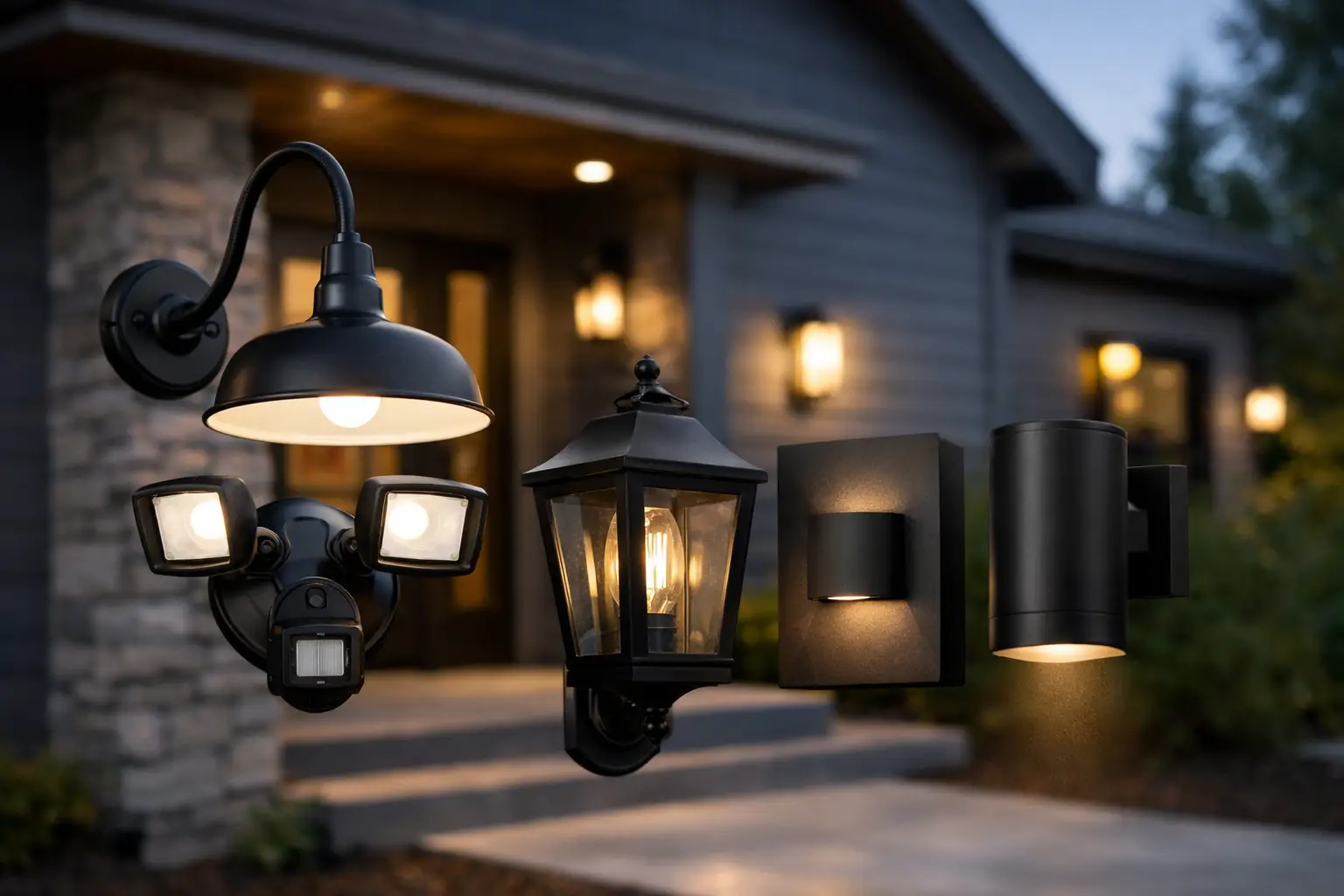
A front entry light fails faster than the paint, the house shows older than it is. That is why the best contractor grade exterior lights are not just a finish decision. They affect install time, maintenance calls, curb appeal, and how quickly a property feels market-ready from the street.
For builders, designers, and investors, exterior lighting has one job: perform well, look current, and hold up without creating a punch-list headache three months later. The right fixture can make builder-basic architecture feel intentional. The wrong one can cheapen a solid elevation, corrode early, or throw weak light where safety matters most. Spec wisely, and you protect margin while improving perception.
What makes the best contractor grade exterior lights worth specifying
Contractor grade should not mean bare minimum. In practice, it means a fixture built for repeatable installs, dependable weather resistance, and broad buyer appeal at a price point that still works across multiple doors.
The best options usually share a few traits. They use durable housing materials such as die-cast aluminum or heavy-gauge steel with a proven exterior finish. They have standard backplates that sit cleanly over common junction box placements. They are easy to level, easy to lamp or include integrated LEDs with credible life ratings, and available in sizes that fit everything from narrow townhome entries to wide garage facades.
This is where pros often save money the smart way. A slightly better fixture can reduce replacement risk, prevent callbacks over water intrusion or premature rust, and give the front elevation a cleaner read in listing photos. That is a real ROI line item, not just a design upgrade.
Best contractor grade exterior lights by project type
If you are sourcing for volume, start with fixture categories rather than brand hype. The best choice depends on exposure, architecture, and your buyer profile.
1. Medium wall lanterns for front entries
For most single-family projects, this is the workhorse. A medium wall lantern in a black, bronze, or textured dark finish fits the widest range of exteriors, from transitional to modern farmhouse to updated traditional. Look for clear glass if you want a brighter, more open look, or lightly seeded glass if you need a softer finish that hides dust and water spotting a little better.
For flips and spec homes, this category usually gives the highest visual return per dollar. It frames the door, photographs well, and can elevate a basic siding-and-shingle facade with very little labor complexity.
2. Up-down cylinder sconces for modern elevations
On contemporary homes, mixed-use projects, and cleaner multifamily facades, up-down cylinders punch above their cost. They create a neat wash of light and read intentionally architectural. They also work well in narrow side-yard access points where a bulky lantern would feel dated or intrusive.
The trade-off is that not every cylinder throws enough usable forward light. Some are strong on effect and weak on function. If safety and wayfinding matter, verify beam spread and output rather than buying on silhouette alone.
3. Large carriage-style lanterns for traditional homes
If the architecture leans colonial, craftsman, or classic suburban, large carriage fixtures still move product. The key is proportion. Undersized exterior lights are one of the fastest ways to make a new build look value-engineered.
Go larger than you think, especially on two-story entries and broad garage walls. A fixture that is too small disappears. A correctly scaled fixture helps the facade feel finished and more expensive.
4. Flush and semi-flush outdoor mounts for porches
Covered front porches, rear patios, and breezeways often need overhead lighting more than wall lighting. Contractor grade here means simple serviceability and a wet- or damp-rated fixture that can tolerate seasonal swings. Designs with clean metal bands, opal glass, or restrained industrial forms tend to age better than ornate pieces that lock you into one style cycle.
These are also efficient for rental and multifamily turnover. A good flush mount provides broad ambient light and tends to survive visual trend shifts longer than decorative statement pieces.
5. Bulkhead and utility styles for service areas
Not glamorous, but essential. Side entries, trash enclosures, maintenance paths, and utility zones need durable light that resists impact and weather. Bulkhead fixtures and compact utility lights are often the right answer because they prioritize function and longevity.
This is where contractor thinking matters. Spend your style budget where the buyer sees it first. Spend your durability budget where abuse and exposure are highest.
6. LED security floods with clean housing
For garages, rear corners, and larger lots, integrated LED security lights are a practical spec. The newer versions look far more refined than the old big-box flood heads and can be selected in forms that blend into modern or transitional exteriors.
Choose adjustable heads only if you truly need aiming flexibility. Fixed clean-profile housings often look better and reduce the chance that someone points the beam poorly during install.
7. Exterior pendant lights for covered entries
A covered porch with enough ceiling height can justify a pendant, and when the architecture supports it, the result is stronger than a standard flush mount. Pendants create a custom-home signal without a major cost jump.
Still, this is not a universal play. In windy exposures or low-clearance porches, pendants can become a maintenance nuisance. Use them when the structure and buyer expectations support the detail.
8. Wet-rated recessed lights for soffits
For builders prioritizing a clean exterior line, wet-rated recessed cans in the soffit are hard to beat. They disappear visually, spread light evenly, and support a more upscale facade, especially on contemporary or higher-end transitional builds.
They do require planning. Placement, spacing, and trim selection matter, and retrofit flexibility is lower than with surface fixtures. But on the right project, they create a polished result that buyers read as premium.
9. Post lights for long walks and drive approaches
Post lights still have a place on larger suburban lots, gated drives, and community entries. The best contractor grade exterior lights in this category balance visibility with restraint. Too decorative and they date the property. Too utilitarian and they feel municipal.
Look for a form that relates to the wall lanterns so the exterior package feels cohesive rather than pieced together from leftovers.
10. Dark-sky-friendly fixtures for tighter neighborhoods
In denser developments and HOA-controlled communities, dark-sky-friendly options are becoming more relevant. They direct light downward, reduce glare, and often look more current. For multifamily and investor-owned properties, they can also improve resident comfort by reducing harsh spill into windows.
This is one of those quiet upgrades that pays off over time. Better light control improves the lived experience, not just the spec sheet.
How to choose contractor grade exterior lights without slowing the job
The fastest way to spec exterior lighting is to narrow the field by five criteria: rating, material, finish, output, and scale.
Start with the rating. Wet-rated is safer for fixtures directly exposed to rain. Damp-rated works under well-protected covered areas. This sounds basic, but mismatched ratings are a common source of premature failure.
Then assess material honestly. Coastal or high-humidity projects need more caution. Standard steel fixtures may be fine inland, but near salt air they can become a liability. Aluminum, composite, or marine-grade options cost more up front but can save significant replacement labor.
Finish matters more than the showroom suggests. Matte black remains the easiest universal spec because it fits current buyer expectations and pairs well with most exterior palettes. Bronze still works on traditional homes and warmer masonry. Brushed nickel outdoors is usually the wrong call for broad-market projects unless the architecture is explicitly contemporary and sheltered.
Output is where many exterior packages miss. Decorative fixtures that look right but throw weak light can hurt safety and create a dim, underwhelming nighttime impression. Warm white in the 2700K to 3000K range is usually the safest bet for residential curb appeal. Cooler temperatures can feel harsh and commercial unless used very intentionally.
Last, size the fixture to the architecture, not the old rule of thumb alone. Builders know this from windows and hardware already. A larger fixture can make an entry feel custom. A tiny fixture on a wide garage elevation reads like a cost cut.
Common mistakes that turn a good spec into a callback
The first mistake is mixing too many styles around one property. A carriage lantern at the front, a modern cylinder at the garage, and a builder-basic flush mount at the rear makes the exterior feel uncoordinated. Keep one visual language throughout.
The second is choosing based on unit cost instead of installed cost. A cheaper light that is awkward to mount, difficult to level, or prone to finish failure is not cheaper after labor and replacement.
The third is ignoring glass maintenance. Clear glass looks sharp on day one but can show dirt fast in dusty developments or near irrigation spray. On some projects, a subtly textured or frosted diffuser is the better operations choice.
The fourth is forgetting listing photography. Exterior lighting is part of first impression marketing. At dusk, the right fixtures help a property look occupied, safe, and more expensive than it is.
A practical spec strategy for builders, designers, and investors
If you are building a repeatable package, create a simple exterior lighting ladder. Use one dependable entry lantern family, one matching garage or side-light option, one porch ceiling fixture, and one security or utility fixture. Keep finishes limited and dimensions standardized where possible.
That approach speeds ordering, reduces approval friction, and helps crews install faster because they are working with familiar hardware. Designers still get enough range to tailor the look, while investors gain consistency across multiple assets.
For many projects, that is the sweet spot. You do not need the most expensive fixture on the board. You need the one that installs cleanly, survives weather, complements the architecture, and helps the property sell or lease with less resistance. Spec these for your next flip or new build, and exterior lighting starts doing what it should have done all along – protecting both curb appeal and margin.
The best exterior fixture is the one that still looks right after the open house, the first storm, and a year of occupancy.






Leave a Reply