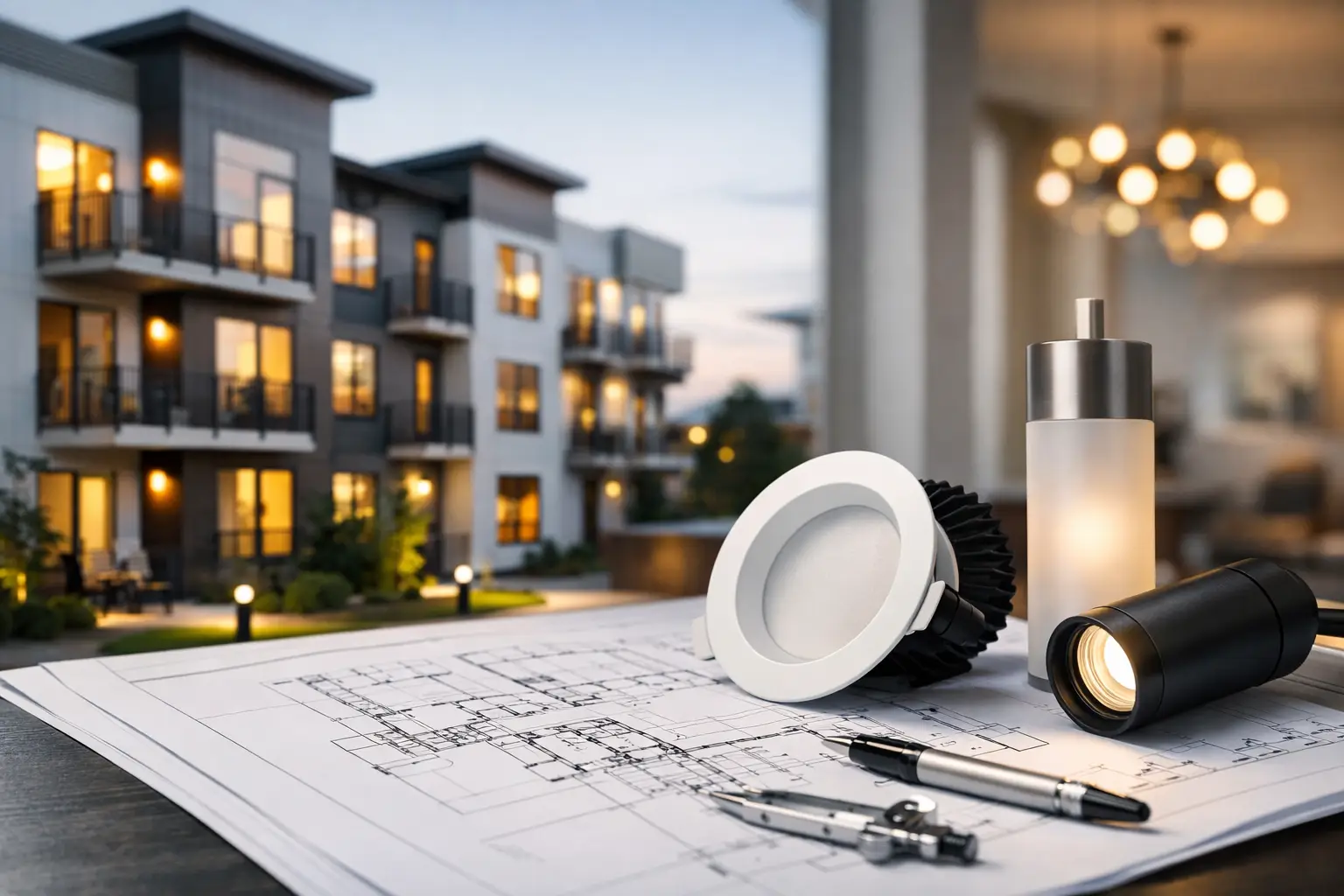
A bad lighting spec rarely fails on paper. It fails when the electrician is waiting on substitutions, the maintenance team is swapping cheap drivers in year two, and the leasing photos make a new build look flatter than the rent roll deserves. A strong multifamily lighting specification guide helps avoid that chain reaction by tying design decisions to install speed, operating cost, tenant appeal, and long-term reliability.
For builders, designers, and investors, that matters because lighting is one of the few finish categories that touches budget, schedule, energy performance, and perception all at once. Get it right, and the property feels cleaner, safer, and more current without blowing the allowance. Get it wrong, and every corridor, unit turn, and warranty call gets more expensive.
What a multifamily lighting spec needs to accomplish
In single-family work, a fixture can be a style choice first and a performance choice second. In multifamily, the order flips. The spec has to support repeatability across dozens or hundreds of units, simplify procurement, and hold up under daily use by residents who will never treat the space like a showroom.
That means every lighting decision should answer four questions. Is it code-compliant for the application? Is it durable enough for the abuse level of the space? Is it easy to source and install at scale? And does it support leasing velocity or resale value?
The trade-off is straightforward. Decorative fixtures can help a lobby or model unit stand out, but over-specifying statement pieces in high-volume unit packages can slow purchasing and create replacement headaches later. On the other hand, going too basic can make a finished asset feel dated on day one. The best specs split the difference – simple, repeatable fixtures in high-use areas, with visual impact saved for the places that influence first impressions.
The multifamily lighting specification guide by space
The fastest way to tighten a lighting package is to spec by use case, not by catalog category. A corridor has different priorities than a club room, and a unit kitchen should not be treated like a stairwell just because both need ceiling-mounted light.
Unit interiors
Inside apartments, focus on clean light output, easy maintenance, and a finish palette that will still look current after multiple turns. In most projects, a warm-neutral range works best because it flatters finishes and skin tones without reading too yellow or too stark. Integrated LED is common, but serviceability matters. If a low-cost integrated fixture fails and the whole unit must be replaced, your long-term maintenance cost may erase the upfront savings.
Bedrooms and living rooms benefit from layered light when the budget allows. A flush mount alone can make a room feel flat, especially in lower-ceiling plans. Adding wall lights or allowing for lamp-friendly switched outlets can improve perceived value without a major cost jump. Kitchens and bathrooms need stronger task lighting and better lens quality. Harsh glare over a vanity is one of the easiest ways to make a fresh renovation feel cheap.
For investors, this is where ROI gets practical. A standard unit package with two or three repeatable fixture families usually performs better than mixing styles across floor plans. It speeds approvals, reduces purchasing errors, and makes unit turns cleaner.
Corridors, stairs, and back-of-house areas
These are performance zones. Residents care that they feel bright, secure, and consistent. Ownership cares that they do not generate constant work orders. Look for vandal-resistant construction where needed, occupancy or vacancy controls where code and use patterns support them, and finishes that hide wear.
In stairwells and service corridors, fixture selection should favor durability and uniformity over decorative value. This is also where lens quality and beam spread matter more than many teams expect. Spotty pools of light can make a newer property feel underbuilt, even if the foot-candle target is technically met.
Emergency and egress requirements need to be integrated early, not patched in later. When the life-safety package is treated as a separate afterthought, ceiling layouts get cluttered fast and substitutions become more likely.
Lobbies, amenities, and exterior entries
This is where lighting earns its keep as a leasing tool. Prospective tenants may not notice a fixture by name, but they absolutely notice when a lobby feels expensive, when a fitness room photographs well, or when an exterior entry feels safe after dark.
Here, decorative lighting can justify itself. A feature pendant, a cleaner vanity package in shared restrooms, or a better-looking sconce at the main entry can raise the perceived quality of the whole asset. The key is restraint. Pick a few high-visibility moments and support them with simpler architectural lighting around them.
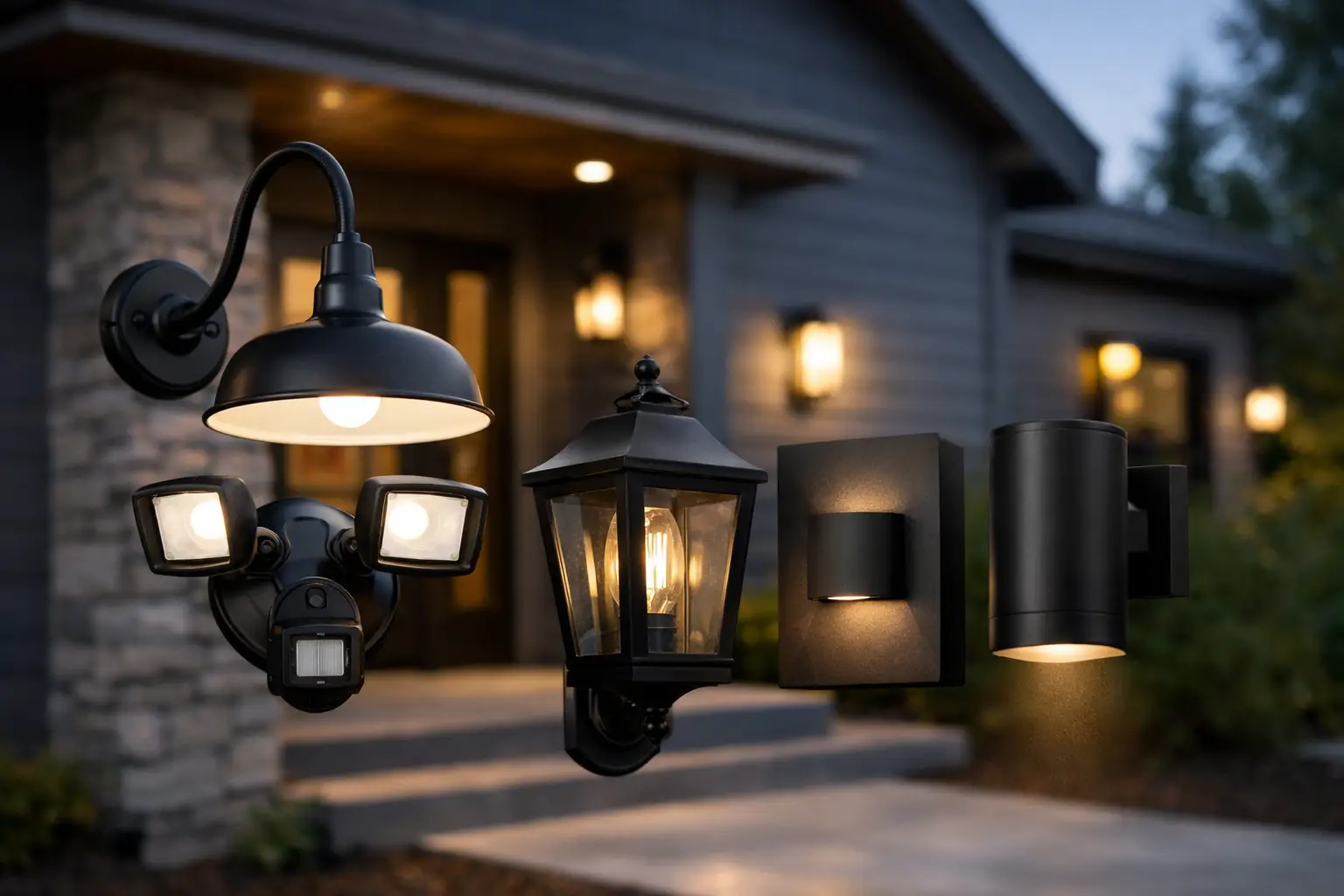
Exterior specs should account for weather rating, finish durability, and light distribution. A stylish fixture that corrodes in one season or throws glare into unit windows is not a smart spec. In many markets, dark-sky sensitivity and neighborhood spill concerns also need consideration.
Builder lighting trends that actually make sense in multifamily
Not every trend belongs in multifamily. Some photograph well and age poorly. Others look plain in a showroom but perform beautifully in the field. The best current direction is quiet modern: slimmer profiles, softer forms, and finishes like matte black, satin brass, and textured white used selectively rather than everywhere.
For market-rate and higher-end projects, larger-scale decorative fixtures in leasing offices, lounges, and entries continue to pull their weight. They create a focal point without requiring expensive customization across the building. In unit interiors, simple domes and builder-basic bowls are steadily losing ground to low-profile flush mounts with cleaner lines and better diffusers.
Controls are another trend worth taking seriously, but only when they align with the operating model. In-unit smart lighting can sound attractive, yet it often adds setup friction and maintenance questions. In common areas, however, occupancy sensing, photocells, and daylight response often pay off quickly through reduced energy use.
How to write a better spec sheet from the start
A strong spec sheet should help the GC, purchasing team, electrician, and ownership group make the same decision for the same reason. If it only serves design intent, it will get value-engineered. If it only serves cost, the finished property may lose appeal.
Start with fixture schedule basics: application, mounting type, dimensions, finish, lumen range, color temperature, voltage, control compatibility, wet or damp rating where applicable, and certification requirements. Then add the details that reduce field confusion – acceptable alternates, driver or lamp replacement expectations, and any finish matching requirements across related fixtures.
This is also where designers can save real time by specifying families rather than one-off pieces wherever possible. A coordinated family for unit hall, bedroom, vanity, and dining locations creates visual consistency and simplifies sourcing. For builders, fewer unique SKUs usually means fewer shipping delays and less chance of partial substitutions.
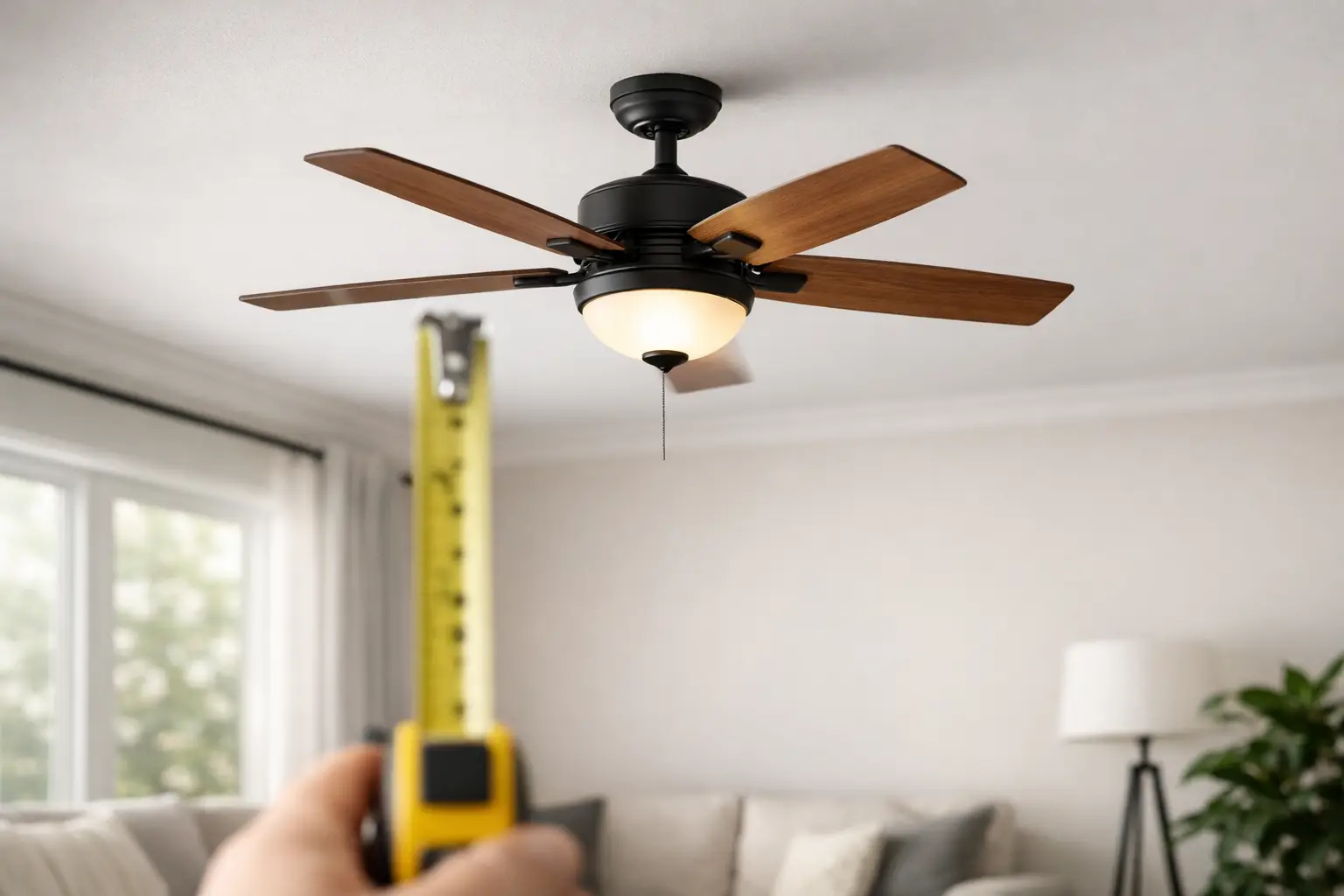
If the project includes ceiling fans, treat them as part of the lighting strategy, not as a separate afterthought. Fan lights should align with the overall color temperature and control approach in the unit. On value-focused projects, that alignment does more for cohesion than adding extra decorative fixtures.
Common mistakes this multifamily lighting specification guide can help you avoid
One of the most common errors is chasing lowest first cost without modeling replacement and labor cost. The cheapest fixture on bid day is often the most expensive fixture by year three.
Another is over-lighting some areas while under-lighting the ones that shape resident experience. A bright package room and dim vanity mirror is a mismatch. So is a dramatic lobby chandelier paired with bargain-grade corridor lighting that makes the rest of the property feel flat.
A third mistake is ignoring lead times until CDs are done. Many attractive fixtures are workable in boutique projects but become risky in volume orders. Before finalizing the package, confirm that the selected lines are realistic for the schedule and can be replenished for future turns.
Lastly, avoid specs that force unnecessary field decisions. If the electrician or superintendent has to guess between similar alternates, the result will vary from building to building. Good specifications remove ambiguity.
The smart way to balance cost, speed, and finish level
There is no perfect fixture package for every multifamily asset. A suburban garden apartment, an urban mixed-use development, and a fast-turn flip-to-rent conversion all need different priorities. That is why the best lighting packages are not the most expensive or the most design-forward. They are the ones matched to the asset strategy.
If speed matters most, reduce SKU count and lean into proven, stocked fixture families. If lease-up optics matter most, put more of the budget into entry sequence, amenities, and model-unit lighting. If long-term hold performance matters most, prioritize serviceable components, durable finishes, and controls that lower operating costs without confusing residents.
That is the real value of a disciplined spec. It turns lighting from a finish selection into a project tool – one that can protect schedule, support rent strategy, and make the property look better the day photos go live. Spec these decisions early, pressure-test them against field realities, and your next multifamily project will feel tighter from bid set to turnover.






Leave a Reply