
A low ceiling changes the whole spec. What looks clean on a showroom board can become a head-clearance problem, a code issue, or a visual drag once it hits an 8-foot room. When weighing ceiling fan vs recessed lighting for low ceilings, the right answer is rarely about style alone. It comes down to airflow needs, fixture depth, room function, buyer expectations, and how hard you need each square foot to work.
For builders, designers, and investors, this is a practical decision with budget and resale implications. A fan can solve comfort complaints fast, especially in bedrooms and smaller living areas. Recessed lighting can make a tight room feel taller and cleaner, which matters in flips, rentals, and staged listings. The strongest spec is the one that fixes the room’s real problem without creating a new one.
Why low ceilings force a different decision
Once ceiling height drops to 8 feet or below, fixture selection gets less forgiving. Standard downrods are usually out. Decorative chandeliers and semi-flush pieces can interrupt sightlines and make a room feel compressed. That is why the ceiling fan vs recessed lighting for low ceilings question shows up so often in renovation planning.
There are also practical limits. A ceiling fan needs safe blade clearance from the floor. Recessed cans or wafer lights need enough plenum space, or a low-profile housing, to fit cleanly around framing and insulation conditions. In older homes, that last point matters more than most specsheets suggest.
Low ceilings also exaggerate visual clutter. One poorly scaled fixture can make a room feel dated or smaller than it is. For investors, that can affect perceived value during showings. For designers, it can flatten an otherwise sharp material palette. For contractors, it can create punch-list issues when clients realize the fixture sits lower than expected.
Where a ceiling fan wins
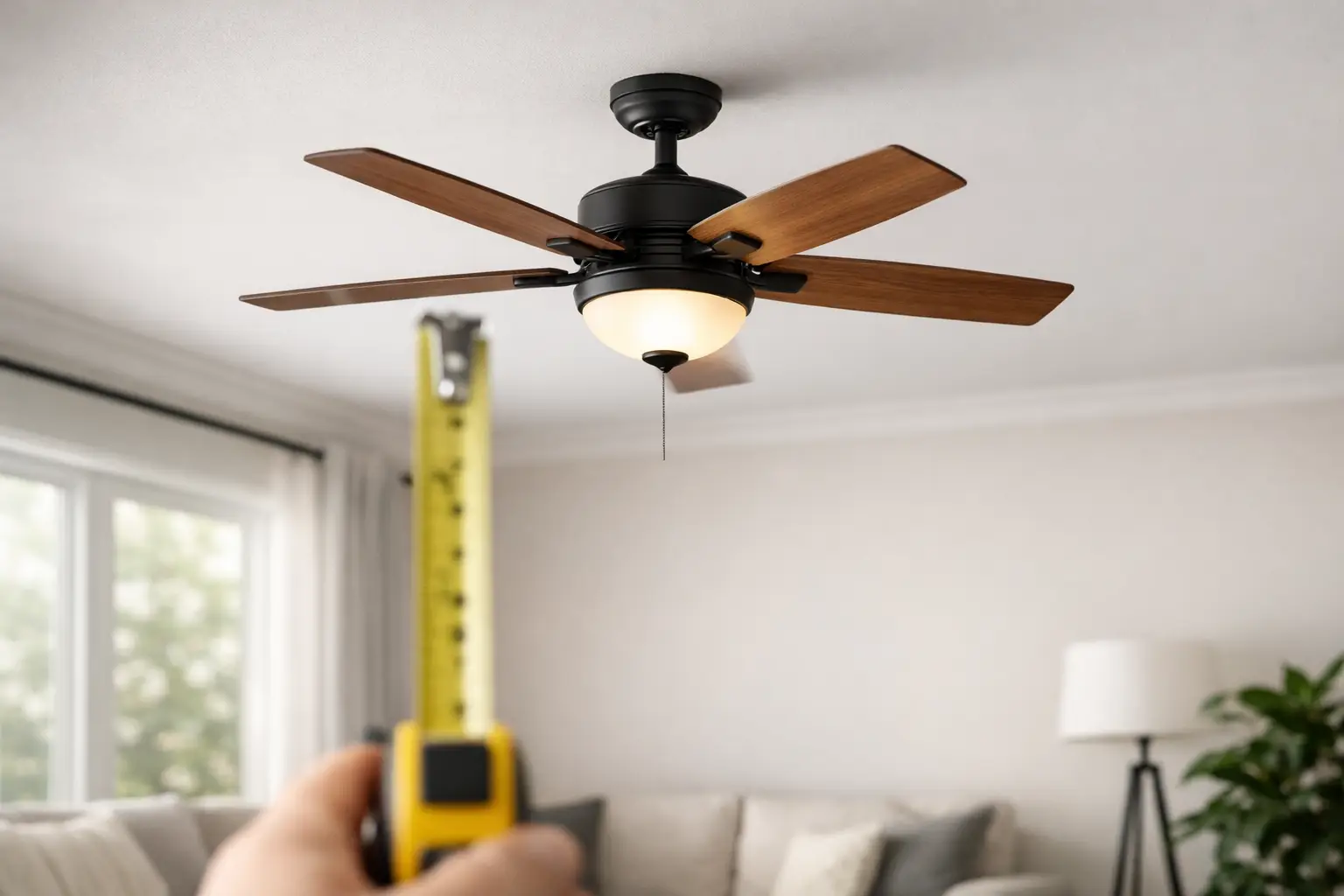
A low-profile, flush-mount ceiling fan earns its keep when comfort is the priority. Bedrooms are the most obvious example. Buyers and renters expect air movement there, especially in warm-weather markets or homes with uneven HVAC performance. A good fan can make a room feel cooler, improve sleep comfort, and reduce pressure on the system during shoulder seasons.
That comfort story has ROI. In a flip, a clean modern fan in the primary bedroom often reads as a useful upgrade, not just decor. In rentals, it can reduce tenant complaints about stuffy rooms. In owner-occupied projects, it gives the client a functional feature they notice every day.
The fan also wins when you need a two-in-one solution. Many low-profile models include integrated LED light kits, which can simplify the ceiling plan and cut install steps. That said, integrated fan lights rarely deliver the same even, layered illumination as a well-planned recessed layout. They are functional, but they are not a full lighting design.
Style matters here. A bulky fan in a low room feels like a compromise. A slim housing, tight blade profile, and clean finish usually perform better visually. Matte black and soft brass still spec well in contemporary and transitional projects, while white disappears best in lower-cost turns where visual quiet is the goal.
Where recessed lighting wins
Recessed lighting is usually the cleaner answer when the room already has adequate airflow or when ceiling height is the main constraint. It keeps the plane overhead visually open, which can make an 8-foot ceiling feel less oppressive. That effect is small on paper but obvious in person, especially in kitchens, hallways, basements, and open living areas.
For flips and staging, recessed lights tend to photograph well. They create broad, even illumination without the visual interruption of hanging fixtures. Listings benefit from that. Tight rooms look brighter. Ceiling lines stay clean. Finishes read more clearly in photos and showings.
Recessed lighting also gives designers more control. You can place light where the room needs it instead of centering everything around one electrical box. That matters in kitchens with cabinet runs, living rooms with layered seating zones, and basement remodels where every inch of headroom counts.
The catch is that recessed lighting solves light, not comfort. In a bedroom or family room with poor air circulation, it may leave the core problem untouched. A brighter room is still a stuffy room.
Clearance, codes, and installation reality
This is where many selections fall apart. Ceiling fans in low rooms must meet clearance requirements from finished floor to blade. In most cases, that means using a true hugger or flush-mount fan and confirming the installed blade height, not just the product category. Some so-called low-profile models still hang lower than expected once the light kit is included.
Recessed lighting sounds simpler, but existing conditions matter. In older homes, joists, shallow cavities, ductwork, and insulation can all complicate placement. Ultra-thin wafer LEDs have made low-clearance installs easier, but they are not a cure-all. You still need a thoughtful layout, proper spacing, and attention to glare.
Builders know this already, but it is worth stating plainly: labor can shift the value equation. Swapping a center fixture for a flush fan is often straightforward. Adding a full recessed layout may mean more cutting, wiring, patching, and trim work. In a cosmetic flip with a tight timeline, that difference matters.
Cost and ROI by project type
If the project is a rental turn or entry-level flip, recessed lighting often delivers broader perceived value in the main living spaces. It makes the home feel updated without asking buyers to have an opinion about fan style. In kitchens and living rooms, that clean-ceiling effect can help a modest renovation present more like a full repositioning.
In bedrooms, the math shifts. A ceiling fan often produces more day-to-day value than recessed lights alone because people feel the benefit immediately. If budget only allows one upgrade in a low-ceiling bedroom, the fan is usually the smarter spec.
For designer-led renovations, the answer depends on the room’s role. If the goal is atmosphere, visual lift, and layered lighting, recessed fixtures paired with lamps or wall lighting can outperform a fan-light combo. If the goal is comfort and utility in a secondary bedroom, guest room, or small den, a flush fan may be the stronger move.
For investors, there is a simple rule: spec the feature that removes the most obvious objection. If the room feels dark, recessed lighting is the fix. If it feels hot or stagnant, install the fan. If both are true and the budget supports it, use both strategically rather than forcing one fixture to cover two jobs poorly.
Best room-by-room approach for low ceilings
In bedrooms, a flush-mount fan usually leads, especially in markets where buyers expect one. Add recessed lights only if the room is underlit or part of a higher-end scope.
In kitchens, recessed lighting is the better default. It protects sightlines, supports task lighting, and avoids grease and dust buildup on fan blades. If ventilation and comfort are concerns, solve them through HVAC or a range hood strategy, not a ceiling fan.
In living rooms, it depends on climate, window exposure, and ceiling height. If the room gets warm and the ceiling is just high enough for a slim fan, that can be a worthwhile feature. If the ceiling feels tight already, recessed lighting will usually make the space present better.
In hallways, baths, laundry rooms, and basements, recessed lighting almost always wins. These rooms benefit more from clear overhead space and even light than from air movement.
The smartest answer is often both
The best low-ceiling projects do not treat this as an either-or question across the whole house. They assign each fixture type to the room where it creates the most value. Recessed lighting carries kitchens, corridors, and common areas. Flush-mount fans handle bedrooms and select family spaces where comfort matters.
That blended approach usually gives the strongest ROI because it aligns fixture function with buyer expectations. It also prevents overusing fans in rooms where they read as clutter, or overusing recessed lighting in rooms that still need air movement.
For pros balancing design, speed, and budget, that is the real takeaway. Do not ask which fixture is better in general. Ask what problem the room is trying to solve, how the ceiling height limits your options, and what the end user will notice first. Spec that solution cleanly, and the room will work harder from day one.
If a low ceiling is forcing a compromise, make it a smart one. The fixture that saves headroom, improves comfort, and supports resale is the one worth installing next.






Leave a Reply