
The final walk is where lighting either reinforces the quality of the build or exposes every rushed decision. Builder punch list lighting fixes tend to look minor on paper – a crooked vanity bar, a dining pendant hung too high, a dimmer that flickers – but these are the details buyers, inspectors, and design clients notice first. They also create the kind of callbacks that eat schedule and margin.
For builders, designers, and investors, the goal is not just to “finish” lighting. It is to close out with fewer site revisits, cleaner presentation, and fixtures that support the sale. The best punch list process treats lighting as a performance item and a visual item at the same time.
Why lighting issues rise to the top at closeout
Lighting is one of the last things everyone sees and one of the first things people test. A cabinet pull that sits slightly off may slide by for a while. A fixture that is out of level or throws uneven light over a kitchen island will not. That is why punch list lighting work has an outsized effect on perceived quality.
There is also a sequencing problem. Lighting often gets installed after paint touch-ups, flooring protection, appliance set, and trim completion. By that point, multiple trades have moved through the same rooms. Fixtures get bumped. Globes get swapped. Switch plates go on before controls are fully checked. Small errors stack up fast.
For investors and flippers, this matters even more because lighting carries staging value. A clean, warm, consistent lighting plan can make a mid-range rehab feel tighter and more expensive. A mismatched finish package or harsh lamp color can flatten that effect immediately.
The builder punch list lighting fixes worth checking first
Not all issues deserve the same urgency. Some are cosmetic and some create real risk, either for code, usability, or buyer confidence. Start with the fixes that affect function and sightlines.
Fixture alignment and mounting
This is the most common closeout problem and the easiest one to see from the doorway. Check that vanity lights center properly over mirrors, pendants align with islands or tables, sconces match in height, and flush mounts sit tight to the ceiling with no visible gap.
If a fixture is slightly off, the trade-off is time versus visibility. In a secondary bedroom, a minor deviation may not justify opening a box again. In an entry, powder room, or dining area, it usually does. These are focal points. If the room is intended to sell the house, perfect alignment is part of the spec whether it was written down or not.
Color temperature consistency
One room at 2700K and the next at 5000K makes a finished project feel pieced together. This is a classic punch list issue because lamps and integrated fixtures are often sourced from different boxes late in the job.
Use one temperature strategy throughout the home, with a reason behind any exceptions. Warm white typically supports residential resale best, especially in living areas and bedrooms. Brighter task zones like laundry rooms or garages may justify a cooler range, but only if it feels intentional. Random variation reads as sloppy, not functional.
Dimmer compatibility and flicker
LED retrofits solved energy issues and created a new punch list category. If dimmers are not matched to fixture drivers or lamp loads, you get flicker, dead travel, buzzing, or lights that drop out before reaching low level.
This is where smart sourcing matters. A cheap dimmer can create an expensive callback, especially if the client notices it during walkthrough. Test every dimmable zone at full, mid, and low settings. If performance is poor, replace the control before turnover. It is one of the highest-ROI fixes on the list.
Switch logic and labeling
Nothing undermines a clean install faster than a switch bank that makes no sense. Three-gang boxes at entries are common problem spots. One switch controls an outlet, another a fan light, another a hallway can, and no one knows which is which.
The practical fix is simple. Walk each switch path like a buyer would. Entry, kitchen, primary suite, exterior doors. If control logic feels confusing, correct it before handoff. In higher-end homes or design-heavy projects, engraved or clearly documented controls can prevent future service calls.
Common lighting defects that trigger callbacks
Some builder punch list lighting fixes show up after the project appears complete. These are the defects most likely to generate a return trip.
Trim gaps, paint lines, and finish damage
Recessed trims with visible gaps, canopy plates over rough cutouts, and scratched fixture finishes are small defects with large visual impact. They also photograph badly, which matters for listings and portfolio work.
Inspect fixtures in daylight and again with lights on. A brushed brass finish may hide fingerprints but still show installation scratches. Matte black can reveal drywall dust and edge chips. If the fixture finish is a design feature, protect it like one.
Inconsistent bulb shape or brightness
Open fixtures and decorative chandeliers expose every mismatch. One lamp slightly brighter than the others or a mixed bulb shape in the same fixture turns a styled space into a maintenance issue.
This is especially relevant in flips and furnished rentals, where buyers read the fixture and lamp combination as a complete look. Standardize brightness, shape, and finish. If one bulb fails before closeout, replace the full visible set when needed rather than patching in a near match.
Exterior lighting that misses the mark
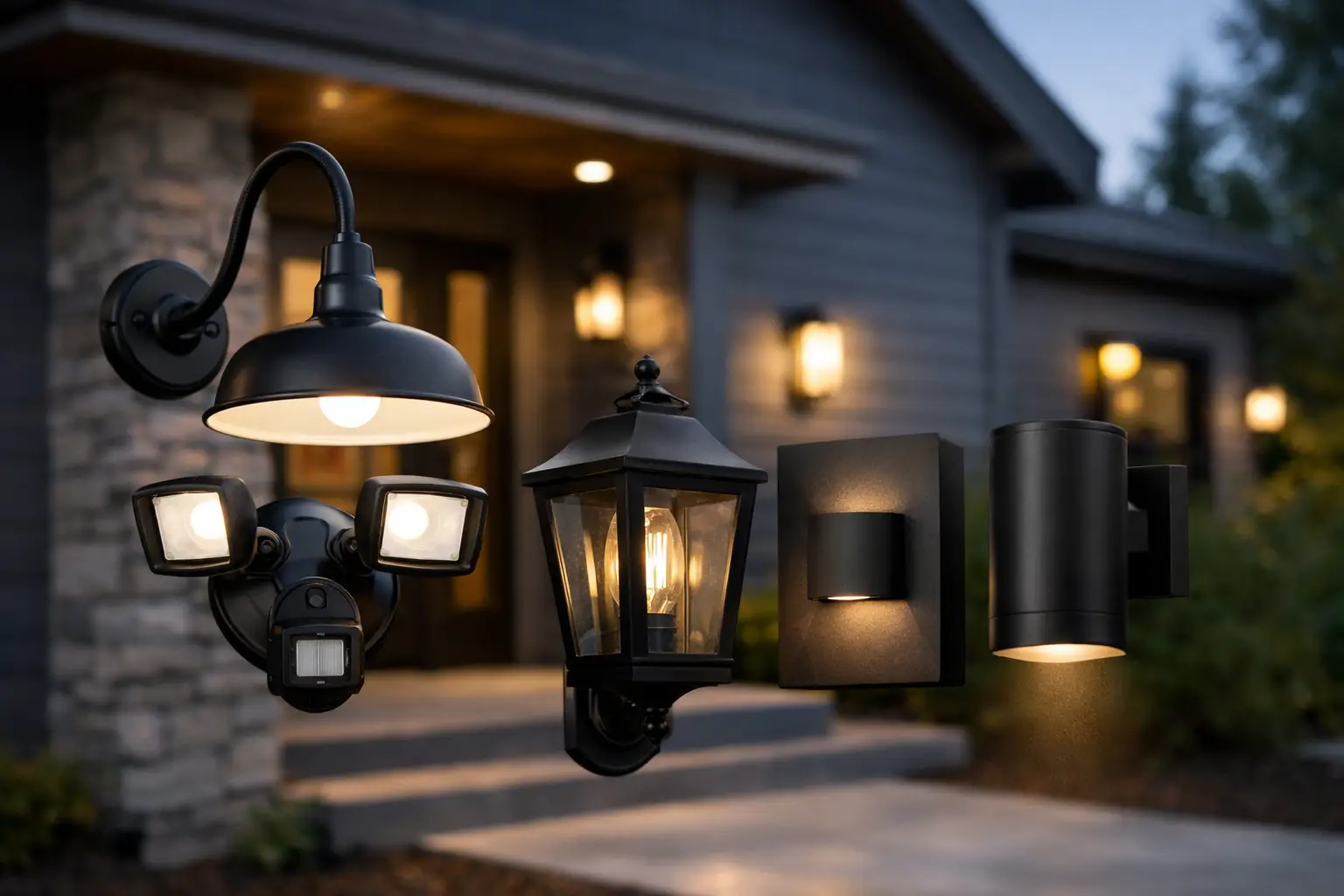
Exterior fixtures often get less attention during punch because teams focus on interiors. That is a mistake. Porch lights mounted at uneven heights, garage sconces scaled too small, or floodlights aimed poorly all affect curb appeal and security.
Exterior lighting should be checked at dusk, not just during the day. What looks fine in sunlight can cast harsh shadows or leave dark spots at night. Investors chasing quick resale should treat this as staging, not just function.
How to run a faster lighting punch walk
The most efficient teams do not inspect lighting fixture by fixture in a random order. They walk by use case. Start at the front approach, move through public spaces, then private rooms, then utility and exterior zones. That mirrors how a buyer experiences the property and helps prioritize what is visible first.
Bring the right lens to the walk. Designers should evaluate scale, finish consistency, and focal-point balance. Builders should check mounting, control function, and install quality. Investors should ask a more direct question: does this lighting help the room show better, or does it need one more adjustment before photos and showings?
If time is tight, focus on five high-impact zones: the entry, kitchen, dining area, primary bath, and front exterior. Those zones do the most work in perceived value. Fixes there tend to outperform back-of-house tweaks in ROI.
Builder lighting trends that affect punch outcomes
Current builder lighting trends are pushing larger fixtures, mixed finishes, more integrated LEDs, and layered controls. All of that can improve a project, but it also raises the risk of punch list issues.
Larger statement pieces demand cleaner centering and scale decisions. Mixed finishes need tighter coordination with hardware and plumbing trim. Integrated LED fixtures reduce bulb maintenance but create driver and dimmer compatibility concerns. Layered controls improve usability only when the switch plan is clear.
The takeaway is simple: the more design-forward the lighting package, the less forgiving the closeout. Trend-led specs can absolutely support higher resale or stronger client presentation, but only if installation discipline keeps pace.
Smarter specs reduce lighting punch later
The cheapest time to solve punch list problems is before they become punch list problems. That starts in procurement and spec writing.
Choose fixture families with reliable finish consistency across sizes and applications. Confirm dimmer compatibility before rough-in is complete, not after trim-out. Standardize lamp temperature and output by room type. For multifamily, spec homes, or repeat investor projects, create a short approved matrix so the field team is not making last-minute substitutions.
This is where a trade-focused sourcing mindset pays off. Products that install faster, adjust more easily, and hold finish quality under jobsite conditions usually outperform lower-cost alternatives once labor and callbacks are counted. A fixture that saves one service trip may be the better budget fixture even if the box price is higher.
Hudson Valley Review’s audience already understands this on the construction side. The design side matters just as much. Lighting is one of the few finish categories that can protect margin, improve staging, and elevate perceived quality in the same move.
When to fix, replace, or leave it alone
Not every issue needs a full replacement. If the box location is sound and the fixture is right for the room, many problems can be solved with remounting, re-centering, control changes, or lamp correction. That is the fast, margin-friendly path.
Replace when the defect is visible, repeated, or tied to a poor original spec. If one integrated LED vanity bar flickers because the driver is incompatible, that may be a control issue. If the same model is failing in multiple baths, the product choice is the issue. Treat repeat defects as procurement data, not isolated punch items.
Leave minor issues alone only when they truly disappear in normal use. The test is straightforward: if a buyer, client, or photographer will notice it within ten seconds, it belongs on the list.
A clean closeout is rarely about dramatic changes. More often, it comes down to ten disciplined lighting decisions made at the right time. Spec smarter, inspect with intent, and fix what people actually see first. That is how lighting stops being a callback category and starts acting like a profit tool.






Leave a Reply