
A flip can have solid comps, fresh paint, and a clean kitchen, then still feel flat the second a buyer walks through the door. The usual culprit is lighting. If you’re choosing the best lighting upgrades for home flips, the goal is not to impress other contractors. It is to make rooms read bigger, cleaner, newer, and more expensive without blowing the budget or slowing the schedule.
That changes how you spec fixtures. The right upgrade is rarely the most decorative option. It is the one that improves first impression, supports staging, installs efficiently, and works for the broadest pool of buyers.
Why lighting moves flip ROI faster than most finish upgrades
Lighting does two jobs at once. First, it fixes function. Dark kitchens, shadowy hallways, and low-output bathrooms make a property feel dated even when the finishes are current. Second, it shapes perception. Good lighting helps buyers notice ceiling height, floor color, tile detail, and room proportions.
For builders and investors, that matters because it multiplies the value of work already completed. A basic quartz top looks better under even task lighting. A modest primary bath feels cleaner with the right vanity fixture. New flooring photographs better when the color temperature is consistent across the house.
There is a trade-off, though. Overspec the decorative fixtures and margins disappear. Underspec them and the flip reads builder-basic in the worst way. The sweet spot is lighting that feels intentional, current, and easy to maintain.
Best lighting upgrades for home flips by impact
1. Replace outdated flush mounts with slim LED fixtures
If the house still has yellowed dome lights or dated mushroom fixtures, start there. A slim LED flush mount instantly modernizes bedrooms, hallways, laundry rooms, and secondary living spaces. It also helps with lower ceilings where a chandelier or semi-flush would interrupt sightlines.
This is one of the highest-efficiency swaps in a flip because install is straightforward, pricing is predictable, and the visual change is immediate. Look for clean profiles in matte black, satin nickel, or simple white, depending on the rest of your hardware package.
The main decision is color temperature. For flips, 3000K usually lands best. It feels warm enough for residential use but crisp enough to show a space cleanly in photos and showings. Go cooler and the house can feel harsh. Go too warm and new finishes may read muddy.
2. Upgrade the dining and entry fixture to create one focal point
Not every room needs a statement, but every flip benefits from one or two visual anchors. The entry and dining area are the best candidates because buyers notice them quickly and they influence the perceived finish level of the home.
This does not mean a dramatic designer fixture with a high replacement cost. A simple linear pendant over a dining area or a well-scaled lantern in the foyer can do the job if proportion is right. Aim for shapes that feel current but not trend-fragile. Clear glass, soft brass, black metal, and mixed materials still perform well because they bridge modern, transitional, and updated traditional interiors.
If the home is starter-price or heavily value-engineered, keep this fixture simple and spend the savings elsewhere. In a move-up flip, one stronger decorative moment can help justify the asking price.
3. Use vanity lighting that flatters faces and tile
Bathroom lighting gets judged fast. Harsh top lighting creates shadows and makes even a renovated bath feel cheap. A modern vanity fixture mounted at the correct height solves that problem while making mirrors, tile, and counters read more polished.
For most flips, horizontal vanity bars with opal or frosted glass are the safest spec. They distribute light evenly and appeal to a wide range of buyers. In more design-forward projects, sconces flanking the mirror can create a custom look, but they add wiring complexity and labor.
This is a classic it-depends category. If the electrical rough is already set for an above-mirror fixture, forcing a sconce layout may not be worth the cost. If you’re gutting the bathroom anyway, side-mounted fixtures can elevate the room without much impact on the total budget.
4. Add pendants over islands only when scale and sightlines support them
Kitchen pendants sell the idea of a finished home. They also show up in listing photos, so buyers often use them as a shorthand for overall quality. But they are not automatic.
In a small galley kitchen or a modest island, oversized pendants can create visual clutter and block views. In an open-concept plan with enough ceiling height, two or three compact pendants can define the kitchen zone and make the entire main level feel more considered.
Keep glass clear or lightly frosted, avoid highly ornate shapes, and choose finishes that match or intentionally coordinate with cabinet hardware. If the rest of the home is quiet, the pendants can carry a little more personality. If the kitchen already has bold veining, two-tone cabinets, or dramatic backsplash tile, simpler is better.
5. Layer recessed lighting where buyers expect brightness
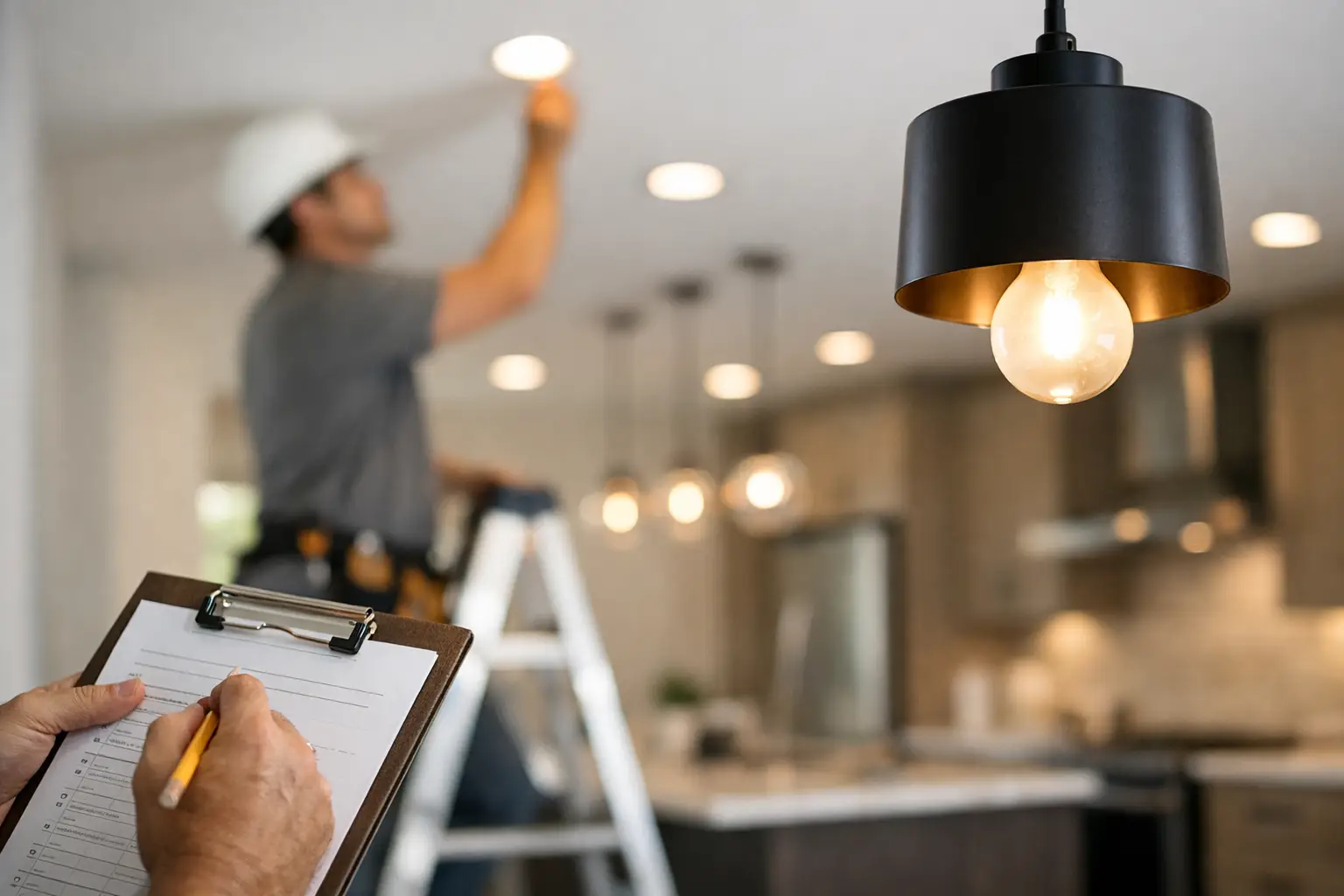
Few upgrades solve more showing-day problems than properly placed recessed lights. Kitchens, main living areas, and primary baths benefit most because these are the spaces where brightness equals perceived cleanliness and value.
The mistake is treating recessed lighting as a blanket solution. Too many cans can flatten a room and add unnecessary cost. Too few leave dead zones that photographs badly. A thoughtful layout matters more than sheer quantity.
Use recessed lights to support the room’s function, then let decorative fixtures provide identity. In flips, that balance keeps the house bright without looking overbuilt. If budget is tight, prioritize the kitchen and living room first. Those spaces carry the strongest emotional and visual weight in both tours and online listings.
Builder lighting trends that actually work in flips
Trends matter, but only when they help a property feel current for the next buyer, not just current this quarter. The strongest builder lighting trends for flips right now are restrained finishes, simpler silhouettes, and integrated LED designs that reduce maintenance.
Matte black still works, especially in homes with black door hardware or window frames. Warm brass performs best when it looks soft and architectural rather than shiny and ornate. Mixed-metal fixtures can also be effective, but only if the rest of the finish package is coordinated. Random mixing reads like leftover inventory, not design intent.
Natural materials are showing up more often, especially in coastal, organic modern, and transitional flips. Woven shades and wood-look details can add warmth, but use restraint. In a broad-market resale, too much texture can narrow buyer appeal.
Where investors waste money on lighting
The most common mistake is putting too much of the budget into fixtures buyers barely remember. Secondary bedrooms, utility spaces, and back halls do not need high-design pieces. They need clean, bright, reliable lighting.
Another miss is ignoring dimmers in key rooms. A dimmer in the dining area, living room, and primary bedroom adds perceived sophistication at a relatively low cost. It also helps staging photos and evening showings. This is a small spec detail that punches above its price point.
Then there is inconsistency. Mixing daylight bulbs with warm bulbs, pairing modern fixtures with visibly dated switches, or using three different finish stories across one level makes a flip feel patched together. Buyers may not identify the issue, but they notice the friction.
How to spec the best lighting upgrades for home flips without slowing the job
Start with a house-wide lighting plan before finishes are ordered. That means choosing one color temperature, one or two core finishes, and a fixture style direction that matches the home’s price point and architecture. This step saves far more time than it costs.
Next, group fixtures by role. Use a repeatable flush mount for secondary rooms, one vanity family for bathrooms, one recessed trim style, and one decorative language for the main public spaces. Standardization helps with procurement, substitutions, and installer efficiency.
Also think about box compatibility and labor. A fixture that looks great online but requires extra assembly or special mounting hardware can eat schedule fast. For volume flippers and busy GCs, the best spec is often the one that balances appearance with installation speed.
If you’re sourcing for multiple projects, this is where trade-focused suppliers and tighter spec sheets matter. A curated package reduces decision fatigue and helps teams move faster from rough-in to listing.
The rooms that deserve priority if budget is tight
If you cannot upgrade every fixture, put money where buyers look longest. Kitchen lighting comes first, then the main living area, primary bath, entry, and dining space. These rooms shape emotional response and listing performance.
Bedrooms, closets, laundry rooms, and secondary baths can stay simpler as long as they feel fresh and cohesive. Think clean light, not decorative heroics. The market rewards houses that feel complete and bright, not houses that spent the whole budget on one chandelier.
The best flips rarely win because every fixture is expensive. They win because the lighting plan feels deliberate, the finish story is consistent, and the house shows well in every room at every hour. Spec with that standard, and your next project will look sharper, stage faster, and give buyers fewer reasons to hesitate.






Leave a Reply