
A tenant moves out, the punch list lands, and the same failures show up again – loose bath hardware, chipped vanity lights, a wobbling ceiling fan, a kitchen faucet that feels one turn away from leaking. That is why choosing the best durable fixtures for rental turnovers is not a style exercise. It is an operations decision that affects labor hours, vacancy time, and how often you pay twice for the same room.
For builders, designers, and investors, the right fixture package should do three things well. It should survive repeated use, install fast, and still look current enough to support rent or resale. The sweet spot is rarely the cheapest item on the shelf. It is the fixture that keeps your team out of the unit for the next two turns.
What makes a fixture turnover-proof
Durability in rentals is partly about materials, but it is also about failure points. A fixture can look solid in a showroom and still perform poorly if it has fragile finishes, proprietary parts, or too many small pieces that loosen over time.
In high-turn environments, the best specs tend to share a few traits. Metal beats plastic where hands touch the product every day. Simple silhouettes age better than trend-heavy details. Standard mounting and common replacement parts matter more than clever features that complicate service calls. If your maintenance lead cannot swap it quickly, the long-term cost rises.
Finish choice matters more than many teams expect. Matte black still has strong design value, especially in flips and newer multifamily units, but it can show scratches and mineral residue faster in hard-water markets. Brushed nickel and satin brass often wear more gracefully. For workforce housing and mid-tier rentals, a forgiving finish usually outperforms a dramatic one.
Best durable fixtures for rental turnovers by room
The strongest turnover strategy is not buying the toughest single product. It is building a repeatable package by room so your team can source in volume, stock spares, and keep the install process consistent.
Kitchen fixtures that hold up
Start with the faucet, because it gets used hard and judged fast. A solid brass or stainless kitchen faucet with a ceramic disc cartridge is usually the right call. Pull-down models can be worth it in higher-rent units, but only if the hose and docking system are reliable. In value-focused rentals, a fixed spout or simple side-spray setup may outperform because there is less to break.
Avoid ultra-thin plated finishes and lightweight handles. They tend to loosen, chip, or feel cheap within a few lease cycles. Look for models with standard deck plates and straightforward mounting hardware. If your plumber can install the same spec across multiple units, you cut labor variability.
Cabinet hardware is another quiet trouble spot. Hollow knobs and low-grade pulls can bend or loosen after repeated use. Go with solid metal pulls in a common center-to-center size. A 5-inch pull in a clean bar or softened square profile works across modern and transitional kitchens and makes future door replacements easier to match.
Bathroom fixtures that reduce callbacks
Bathrooms create the most service noise per square foot, so this is where fixture durability pays back quickly. For sink faucets, single-handle designs with ceramic cartridges are usually the best operational choice. They are easier for tenants to use, easier to clean, and simpler to replace.
Towel bars deserve more scrutiny than they usually get. In rentals, they function like grab bars even when they are not rated that way. That means flimsy wall anchors and decorative set screws are asking for repeat repairs. Robe hooks are often the smarter spec in smaller baths because they put less stress on the wall and are harder to rip loose.
Shower trim should be simple, pressure-balanced, and from a line with readily available replacement cartridges. This is not the place to get creative with obscure brands. Standardization wins. If your maintenance team already knows the valve family, future repairs are faster and less disruptive.
Lighting that survives turnovers and still rents well
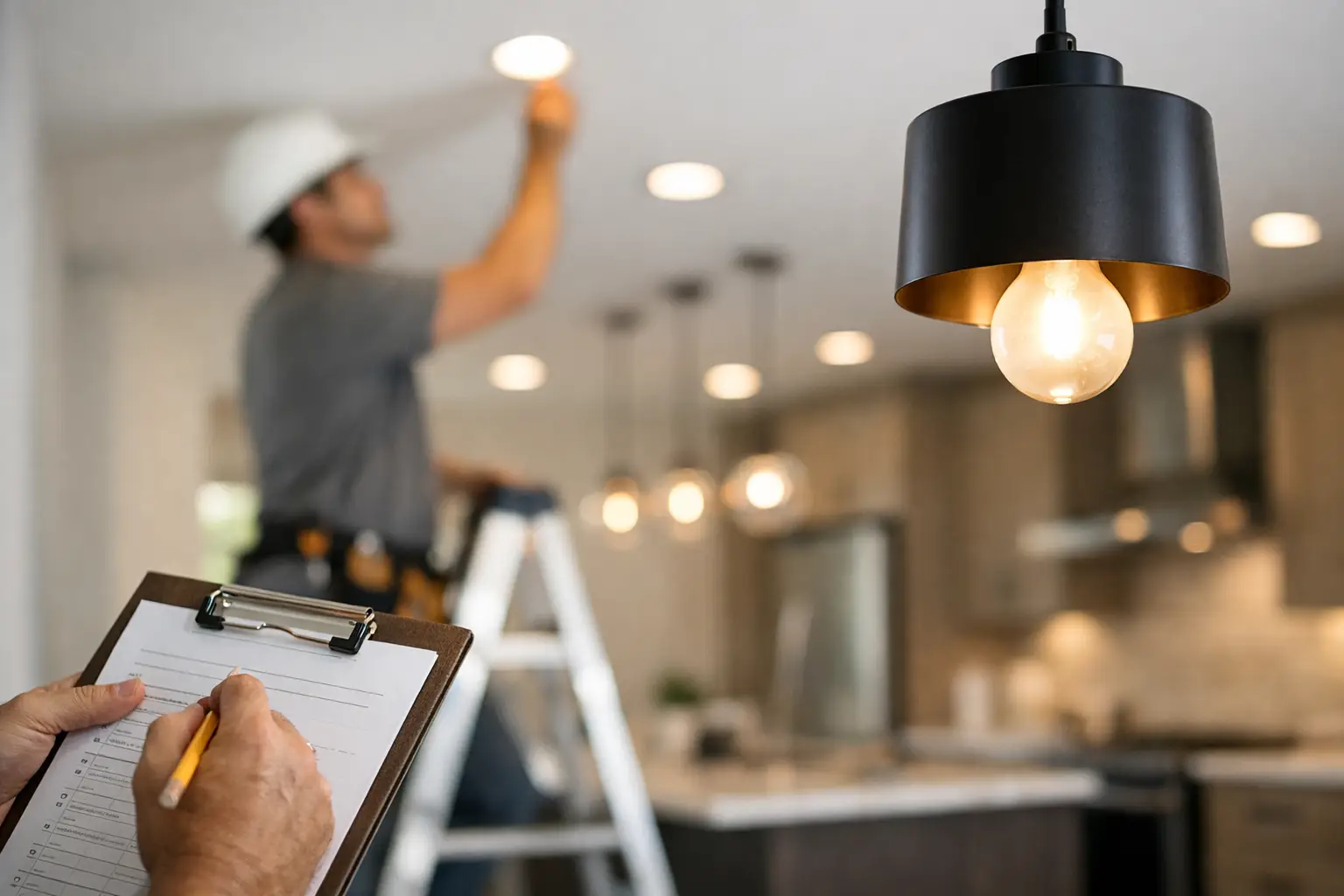
Lighting is one of the easiest ways to make a unit feel upgraded without stretching the budget, but only if you spec fixtures built for rental reality. Look for metal housings, durable diffusers, and integrated LED fixtures from dependable lines. Cheap flush mounts with brittle acrylic shades often crack during cleaning or bulb changes.
In hallways, bedrooms, and utility areas, low-profile flush or semi-flush mounts are still the workhorses. They install quickly, fit varied ceiling heights, and keep the visual language consistent. In bathrooms, damp-rated vanity lights with simple glass or durable acrylic shades make more sense than ornate fixtures with multiple fragile parts.
For kitchens and dining nooks, decorative pendants can help with leasing appeal, but only in the right unit class. In heavy-turnover properties, a sturdy semi-flush fixture usually gives better lifecycle value. It is less vulnerable during move-ins and move-outs, and replacement is easier if needed.
Ceiling fans as performance fixtures, not just decor
Ceiling fans earn their keep in rentals when they improve comfort and help reduce HVAC dependence, especially in warm climates or top-floor units. But they need to be chosen like equipment, not accessories.
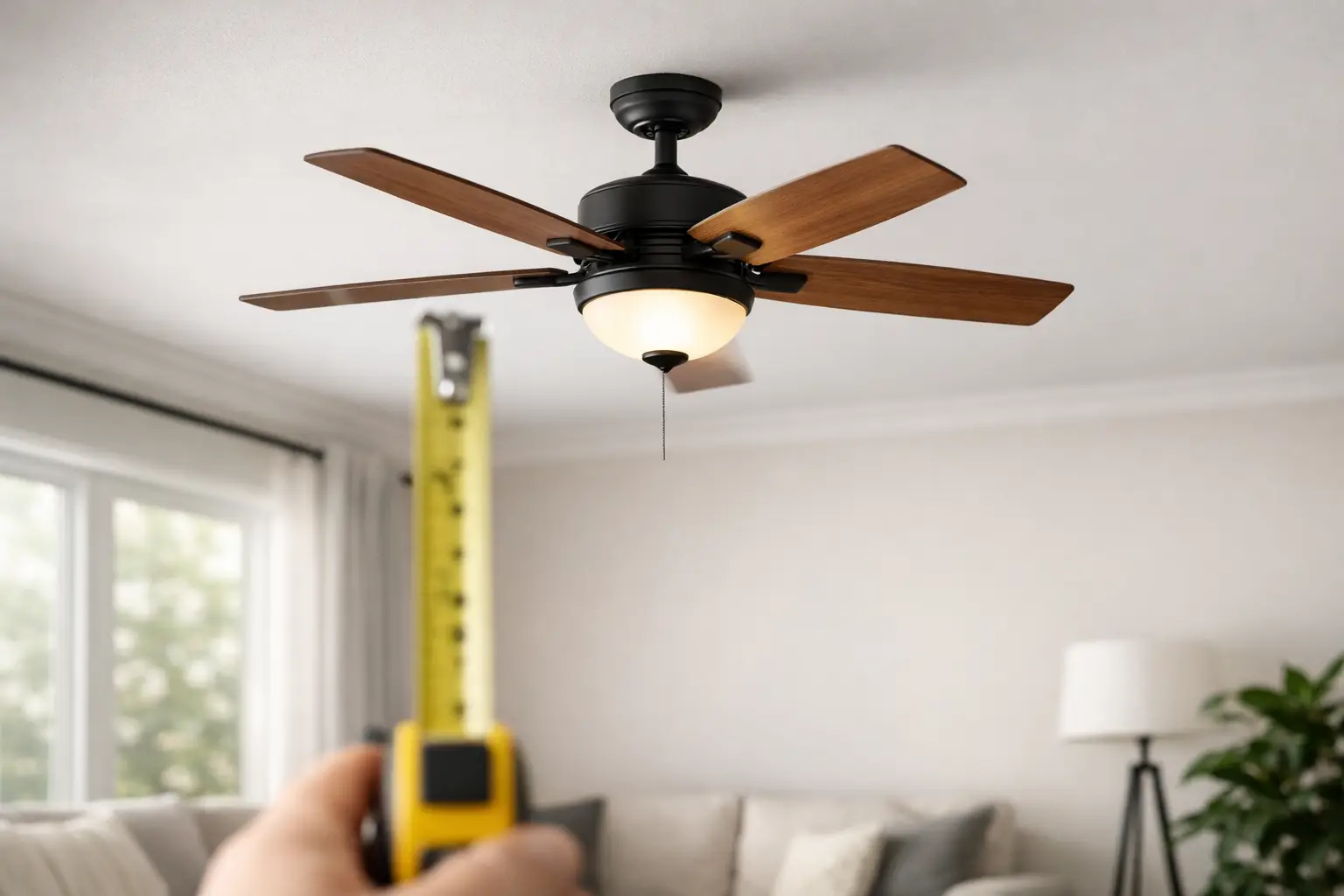
The best fan specs for turnovers prioritize quiet motors, balanced blades, integrated LEDs, and straightforward mounting systems. Remote-only fans can frustrate both tenants and maintenance teams if the remote disappears. A wall control or pull-chain backup is often the better operational choice.
Blade finish matters too. High-gloss laminates can chip at the edges over time, while quality sealed finishes tend to hold up better. For most rentals, a 52-inch fan in living rooms and primary bedrooms covers the broadest use case. If your teams source through trade channels like Fan & Lights, standardizing one or two reliable fan families can simplify both procurement and replacements.
Where owners lose money on fixture selection
The most expensive mistake is confusing low first cost with value. A faucet that saves $35 upfront but fails one turn earlier is not cheaper once labor, scheduling, and vacancy drag are included. The same goes for bargain vanity lights that discolor or fans that wobble after a season.
Another common miss is overspecifying. Luxury features in a Class B rental rarely produce Class A returns. Touchless faucets, statement sconces, and specialty finishes can make sense in high-end furnished units or short-term rentals, but in standard annual rentals they often add replacement risk without enough rent lift.
Then there is the issue of mismatch. A durable fixture package should align with the property’s rent band, tenant profile, and maintenance capacity. A small investor self-managing four units may need different specs than a builder delivering a 60-door community. It depends on who will service the unit and how quickly parts can be sourced when something fails.
How to spec fixtures for speed and ROI
Start by creating a base package for each asset type. That means one kitchen faucet, one bath faucet family, one vanity light, one flush mount, one ceiling fan, and one hardware finish for the majority of units. Exceptions should be intentional, not accidental.
Next, review every item through three filters: install time, serviceability, and visual staying power. If a fixture takes longer to level, requires special bulbs, or uses a finish that dates quickly, it may not belong in your turnover package. This simple review often removes products that look fine in a catalog but create jobsite friction.
It also helps to think in replacement cycles. Lighting and fans should comfortably outlast paint and flooring refreshes. Faucets and bath accessories should survive multiple tenants with minor maintenance at most. If you are replacing the same fixture every other turn, the spec is wrong.
For design teams, this is where smart sourcing can separate a good package from a high-performing one. A fixture does not need to be flashy to signal quality. Clean lines, consistent finish stories, and better proportions can make a basic package feel intentional. That supports staging, photos, and perceived value without pushing the budget into a danger zone.
A practical fixture package that usually works
For many mid-market rentals and flips, a dependable package looks like this in practice: a brushed nickel or satin black kitchen faucet with ceramic cartridge, matching single-handle bath faucets, solid metal cabinet pulls, robe hooks instead of long towel bars where space is tight, integrated LED flush mounts, damp-rated vanity lights with durable shades, and a quiet 52-inch ceiling fan in main living spaces and primary bedrooms.
That package is not glamorous. It is profitable. It shortens decision-making, keeps visual continuity across units, and lowers the odds of emergency replacements during make-ready.
If you want to push the design a step further, do it in controlled places. Upgrade the dining fixture in higher-end units. Add a more architectural fan in living rooms. Use a warmer metal in select renovations where the comps support it. Keep the bones durable and let the hero moments stay easy to replace.
The best durable fixtures for rental turnovers are the ones your crew does not have to think about twice. Spec them once, buy them smart, and let your next rehab move faster with fewer surprises.





Leave a Reply