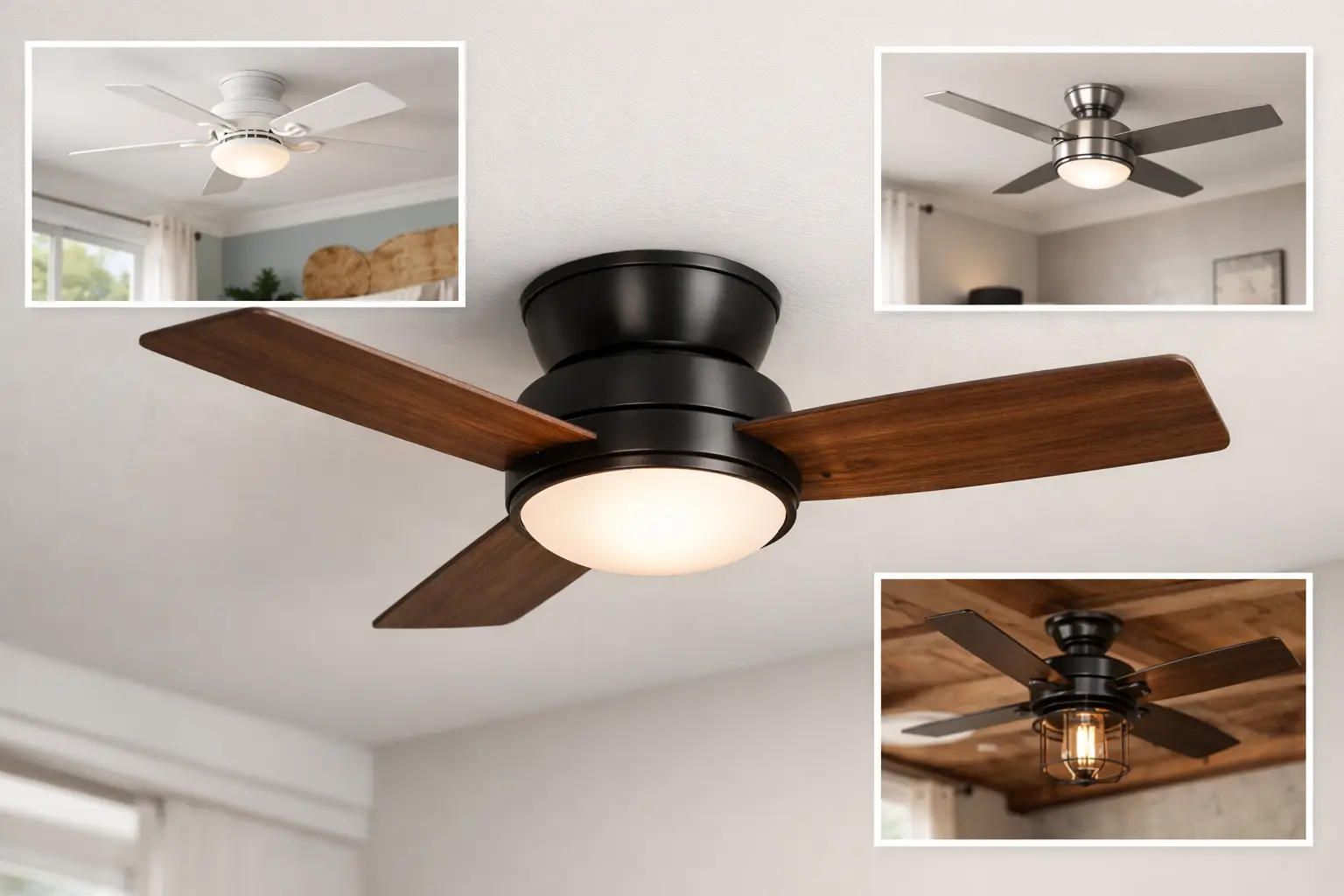
Low ceilings expose bad fan choices fast. A fixture that hangs even a few inches too low can throw off sightlines, fail code clearance, and make a finished room feel tighter than it should. That is why choosing the best ceiling fans for low ceilings is less about browsing styles and more about matching profile, blade span, airflow, and finish to the room’s job.
For builders, designers, and investors, this is a spec decision with downstream impact. The right low-profile fan helps a bedroom read larger, keeps staging photos clean, and reduces callback risk after install. The wrong one creates clearance issues, visual clutter, or weak airflow that buyers notice the first night they sleep in the space.
What actually makes a ceiling fan work for a low ceiling
In most low-ceiling applications, you are looking for a hugger or flush-mount fan. These install tight to the ceiling without a downrod, which helps preserve headroom and keeps the fixture proportional in rooms with 8-foot ceilings. As a rule of thumb, fan blades should sit at least 7 feet above the floor. That sounds simple, but integrated light kits, decorative housings, and overly deep motor assemblies can quietly eat into your clearance.
Airflow matters just as much as drop height. Some flush-mount fans look right on paper but underperform because the blades sit too close to the ceiling. That reduces the air the fan can pull from above, which can cut efficiency. In other words, the best ceiling fans for low ceilings are never just the thinnest models. They balance low profile with enough blade pitch and motor quality to move air where people actually feel it.
For project work, start with four filters: total drop from ceiling to light, blade span, motor type, and whether the fan includes an integrated LED. Those four specs will narrow the field quickly.
The best ceiling fans for low ceilings by project type
There is no single winner for every property. A fan that works in a compact condo bedroom may be the wrong call for a flip’s open-plan living area or a rental where replacement costs matter more than finish detail.
Best for builder-grade installs: Hunter Dempsey Low Profile
The Hunter Dempsey Low Profile remains a practical default when you need dependable performance, clean styling, and broad finish flexibility. Its modern housing works across transitional, farmhouse-leaning, and basic contemporary interiors without demanding redesign around the fixture.
What makes it useful on jobsites is predictability. It is widely recognized, easy to spec in multiple room sizes, and typically available in matte black, fresh white, and brushed nickel finishes that match common hardware packages. For builders pushing volume, that kind of consistency saves time.
The trade-off is that it will not read as a hero fixture in high-design spaces. It is a safe choice, not a memorable one.
Best for design-forward projects: Minka-Aire Concept II LED
If the room needs to feel elevated without sacrificing clearance, the Minka-Aire Concept II LED is one of the strongest low-profile options. It has a more refined silhouette than many flush-mount fans, and the integrated light keeps the profile compact.
Designers tend to like this model because it feels intentional. It does not scream utility, and it photographs well in staged listings. In a primary bedroom, boutique rental, or upgraded condo renovation, that matters.
The compromise is budget. This is usually not the fan for a cost-sensitive rental refresh unless the finish package is doing heavy work for resale value.
Best for modern flips: Modern Forms Axis Hugger
For flippers leaning into a sharper contemporary spec, the Modern Forms Axis Hugger is worth a look. The profile is lean, the blades read architectural rather than decorative, and the smart-control features can add buyer appeal in competitive markets.
This type of fan works especially well in living rooms and bedrooms where matte black hardware, slim recessed lighting, and warm neutral paint are already doing the visual heavy lifting. It aligns with current buyer expectations better than ornate fan bodies and frosted tulip light kits.
The trade-off is install coordination. Smart features are valuable, but only if the electrician and end user setup are straightforward. In entry-level projects, simpler may still be smarter.
Best for traditional or transitional homes: Casablanca Durant Low Profile
Some homes do not want an ultra-modern fan. In transitional colonials, updated suburban resales, or warmer staged interiors, the Casablanca Durant Low Profile lands better. It offers a more substantial visual presence without hanging too low.
This is a good example of spec matching context. A fan can be technically correct and still feel wrong for the architecture. The Durant helps avoid that problem while still meeting practical low-ceiling needs.
It may feel too classic for minimalist interiors, so use it where trim profiles, cabinet styles, and door hardware already support a softer look.
Best for budget-sensitive rentals: Harbor Breeze Mazon
For smaller bedrooms, rentals, and units where replacement simplicity matters, the Harbor Breeze Mazon is a workable budget option. Its compact form suits tighter rooms, and the price point can make sense for multi-unit refreshes where controlling per-door spend matters.
The reason this fan belongs on the list is not luxury. It is efficiency in the business sense. If you are turning units quickly and need a fan that fits low ceilings without visual chaos, a model like this can keep the scope moving.
Just watch room size. Smaller fans can underserve larger bedrooms or living spaces, and weak airflow becomes a tenant complaint fast.
Best for larger rooms with low ceilings: Kichler Sola Flush Mount
Bigger rooms create the hardest low-ceiling fan decisions. You need enough blade span to move air, but an oversized fixture can dominate the room visually if ceiling height is limited. The Kichler Sola Flush Mount handles that balance better than many competitors.
It gives larger rooms a modern, polished look while maintaining a close-to-ceiling profile. In open living areas, oversized bedrooms, or flex rooms staged as offices, that can improve comfort without making the ceiling feel crowded.
As always, confirm dimensions carefully. A large-span fan in a narrow room can still look awkward, even if the drop is compliant.
Sizing and spec rules that prevent expensive mistakes
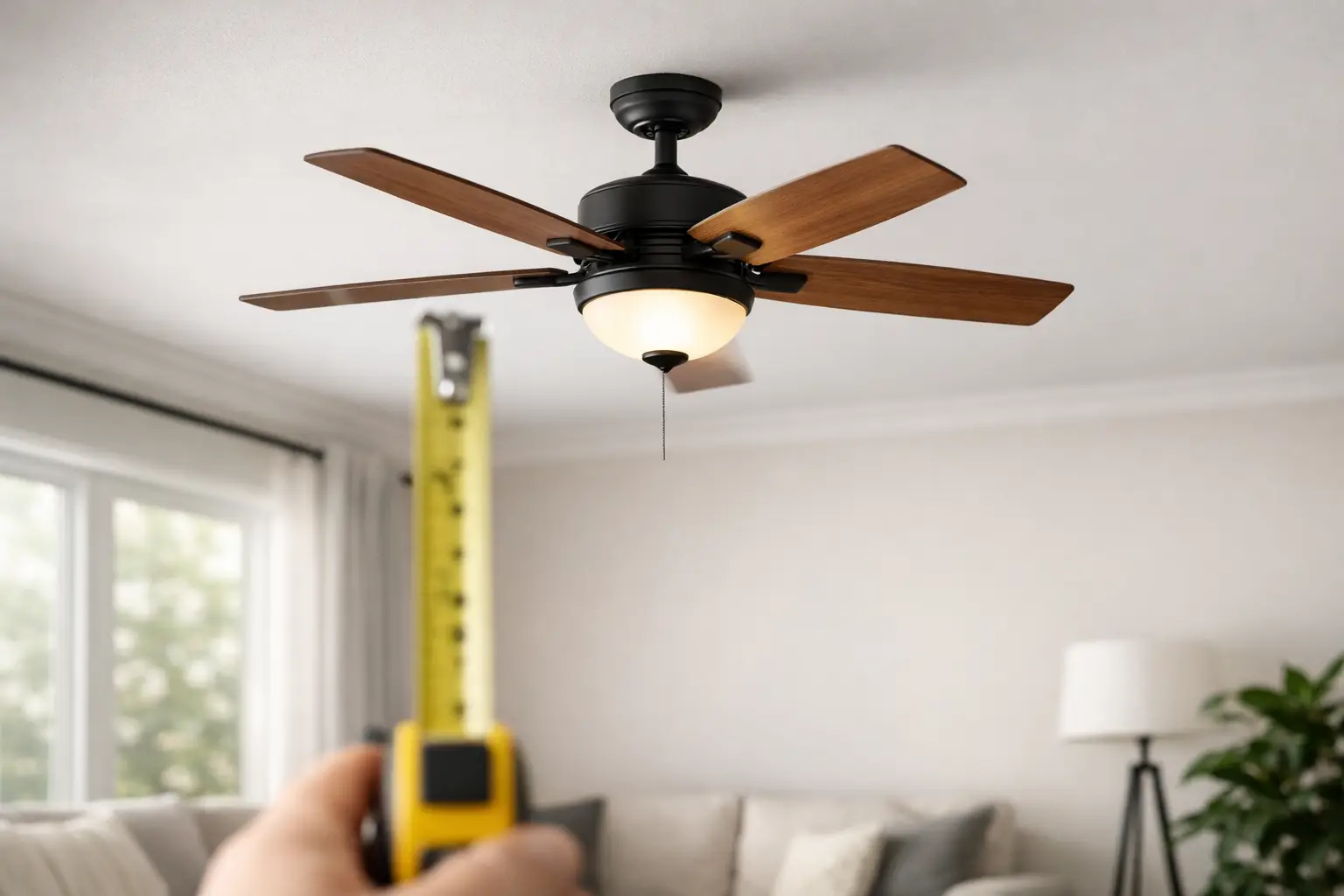
The fastest way to miss on a low-ceiling fan is to shop by style before measuring the room. For bedrooms around 10 by 10 feet, a smaller blade span usually works. For primary bedrooms and medium living rooms, a mid-range span is often the safer call. Once you move into larger open areas, you may need a larger fan or even multiple fans, depending on layout.
Pay attention to mount type and total fixture depth, not just the words low profile. Product marketing is loose. One brand’s flush fan may sit significantly lower than another’s. If the room has an 8-foot ceiling, every inch counts.
Motor quality also deserves more attention than it gets. DC motors are typically quieter and more efficient, which matters in bedrooms, furnished rentals, and staged resales where buyers notice sound quickly. AC motors can still make sense for straightforward value-engineered projects, but the savings should be real enough to justify the trade-off.
Integrated LEDs simplify the profile and reduce future bulb mismatch issues. That said, serviceability matters. On long-hold rentals, a fully integrated fixture can be less convenient if components fail outside warranty. For flips and for-sale inventory, integrated lighting is often worth it because the cleaner look supports resale presentation.
Finish and style choices that help rooms sell
Low ceilings make visual clutter more obvious. That is why finish discipline matters. In most projects, matte black, white, brushed nickel, and soft brass are the safest lanes. They coordinate easily with current hardware and lighting packages, and they do not fight for attention.
White fans are still underrated in low rooms because they visually recede. In a standard 8-foot bedroom with white ceilings, a white flush-mount fan can almost disappear while still adding function. That is useful in flips where the room needs to feel larger on camera.
Black fans create stronger contrast and can look excellent in modern or farmhouse-leaning spaces, but they pull the eye upward. That can be a plus in a well-composed room and a negative in a cramped one. It depends on ceiling height, wall color, and how many other dark elements are already in the space.
For designers building a finish story, think of the fan as part of the lighting plan, not an isolated appliance. The fan should relate to sconces, pendants, cabinet hardware, and door levers. That coordination is often what makes an economical fan look custom.
Where low-profile fans deliver the best ROI
Bedrooms are usually the first priority. Buyers and renters expect ceiling fans there, especially in warmer markets, and a flush-mount unit solves comfort without sacrificing clearance. Secondary bedrooms benefit most from simple, quiet, low-maintenance models.
In living rooms, the fan has to do more visual work. This is where spending a bit more for a cleaner housing and stronger finish can pay back in perceived value. If the room is staged for listing photos, the fan becomes part of the first impression.
Hallways, dining rooms, and very formal sitting spaces are more situational. Not every low ceiling needs a fan. If the fixture would compromise furniture placement, sightlines, or architectural lighting, skip it and use a flush-mount light instead. Good specs solve problems. They do not create new ones.
If your team is building a repeatable package for flips, rentals, or client renovations, create a short approved list by room type and ceiling height. That reduces decision fatigue and prevents mismatched installs. Resources like Hudson Valley Review can help pros sharpen those specs around performance, finish alignment, and resale impact.
The best choice is usually the one that disappears into the room while doing its job well. Spec that fan, and your next low-ceiling project will feel bigger, cleaner, and easier to sell.







Leave a Reply