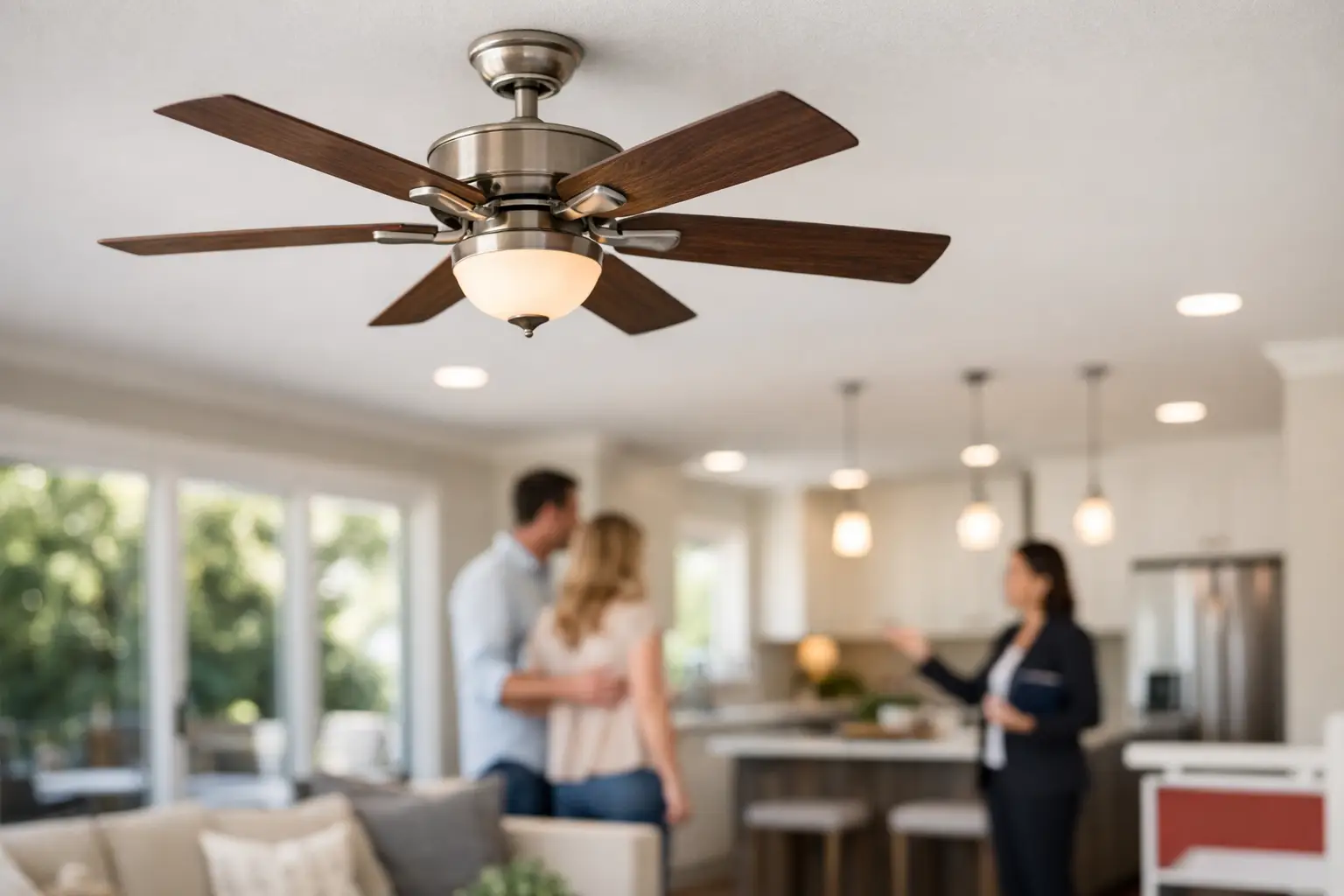
A ceiling fan rarely makes the highlight reel in a resale listing. Buyers notice the kitchen island, the flooring, the light, the primary bath. But when a room feels stuffy, dim, or unfinished, they notice that too. That is where ceiling fans quietly earn their keep.
For builders, designers, and investors, the better question is not simply do ceiling fans add value to home resales. It is whether the right fan improves perceived quality enough to support price, shorten days on market, or help a buyer say yes faster. In many projects, the answer is yes – but only when the fan matches the home, the room, and the resale strategy.
Do ceiling fans add value to home resales in real terms?
Usually, ceiling fans add modest resale value and stronger buyer appeal rather than dramatic appraised value. They are not in the same category as adding square footage or a full kitchen renovation. Think of them as a functional finish upgrade. They improve comfort, support energy efficiency messaging, and help a space feel complete.
That distinction matters for ROI. A well-chosen fan might not add thousands to an appraisal on its own, but it can help justify your overall asking price by reducing buyer objections. In a flip, rental reposition, or mid-market new build, that can be enough to move the needle.
Buyers tend to read ceiling fans as a signal in three ways. First, they suggest the home is practical and livable, especially in bedrooms, living rooms, bonus rooms, porches, and sunrooms. Second, they can make larger rooms feel more architecturally finished. Third, they hint at lower cooling costs and better air movement, even if the actual savings vary by climate and use.
If you are trying to squeeze every dollar from a resale, that kind of low-drama utility matters. It is not flashy, but it photographs well, stages well, and solves a real comfort issue during showings.
Why ceiling fans matter more in some markets than others
Ceiling fans are not equally valuable in every region or price tier. Climate is the first filter. In warmer or humid markets, buyers expect them. In four-season markets, they still help, but they may read as optional unless the home lacks strong air circulation.
Home style is the second filter. In a coastal, farmhouse, transitional, or contemporary home, a fan often feels natural. In a formal historic property with ornate ceiling medallions and statement chandeliers, adding fans everywhere can undercut the design language. That does not mean skip them entirely. It means spec selectively.
The third filter is buyer profile. Entry-level and mid-market buyers often value practicality and lower operating costs. Move-up buyers want comfort without compromising style. Luxury buyers are less impressed by the mere presence of a fan and more sensitive to whether it looks integrated, quiet, and architecturally appropriate.
This is why one builder can install ceiling fans in every bedroom and see an easy payoff, while another over-specs decorative fans that do nothing for the target buyer. The product itself is not the strategy. The fit is.
Where ceiling fans deliver the best resale return
The strongest resale return usually comes from rooms where buyers expect comfort and function. Primary bedrooms are high on that list. A fan there feels useful, and for many buyers, expected. Secondary bedrooms also benefit, especially in family-oriented homes.
Living rooms and family rooms are another smart placement, particularly when the ceiling height makes the room feel visually empty. A properly scaled fan helps fill that vertical space while improving airflow. Covered outdoor living areas can be just as valuable. A damp-rated or wet-rated fan on a porch or patio makes that square footage feel more usable, which supports the lifestyle story buyers are already buying into.
Where the payoff drops is in rooms where fans create clutter or conflict with another focal point. Dining rooms are a common example. If the room is centered around a decorative fixture, replacing it with a fan-light combo often cheapens the look. The same can happen in smaller formal rooms where blade spread overwhelms the ceiling plane.
For flippers and value-add investors, a simple rule works well: prioritize bedrooms, main living spaces, and outdoor zones first. If the budget gets tight, those are the areas that carry the best mix of utility and buyer perception.
What buyers actually notice
Most buyers will not ask for the fan motor specs during a showing. They notice quieter signals. Does the room feel comfortable? Does the fixture look current? Does the finish match the rest of the hardware and lighting? Does the fan wobble, hum, or cast strange shadows?
This is where quality matters more than price alone. A cheap, builder-basic fan with dated glass bowls can make a renovation feel formulaic. A clean, modern fan in matte black, brushed nickel, soft brass, or a wood-tone finish can elevate the whole room with minimal budget impact.
Scale is another make-or-break detail. Too small, and the fan looks like an afterthought. Too large, and it dominates the room. In resale work, buyers may not articulate that mismatch, but they feel it. The room simply reads wrong.
Integrated LED lighting also tends to outperform older multi-bulb fan kits for resale. It looks cleaner, simplifies maintenance, and photographs better. For pros balancing install speed with presentation, that is usually the better spec.
The ROI case for builders, designers, and investors
If you are evaluating whether ceiling fans belong in your scope, think in terms of project efficiency, not just resale line-item value. Fans can reduce the need for separate decorative fixtures in some rooms, improve staging, and support a broader narrative of comfort and thoughtful upgrades.
For builders, ceiling fans can be a smart standard or upgrade package item. Standardizing a few reliable SKUs across floor plans cuts sourcing friction and install confusion. For designers, they offer one more layer of finish coordination, especially in open-plan homes where every overhead element is visible at once. For investors, they are often one of the cleaner low-cost upgrades because they are visible, useful, and easier to justify than purely cosmetic swaps.
That said, the ROI falls fast when installation becomes complicated or inconsistent. If you are retrofitting old electrical boxes, patching ceilings, or replacing perfectly acceptable fixtures in low-impact rooms, the return gets thinner. The fan needs to solve a real project problem – buyer comfort, room completion, staging quality, or market expectation.
When ceiling fans do not add much resale value
There are cases where fans are simply not the best spend. In a mild-climate condo with low ceilings and strong central air, they may add little. In a luxury property where buyers expect a more tailored lighting plan, generic fans can feel like a downgrade. In historic homes, an overly modern fan can look disconnected from the architecture.
There is also a maintenance perception issue. If the blades collect dust, the finish chips, or the motor is noisy, a fan shifts from asset to evidence of deferred upkeep. Buyers are quick to read small defects as signs of bigger ones.
This is why bargain-bin product choices can backfire. Saving $80 per room is not a win if the finished space feels cheaper and the listing photos lose polish.
How to spec ceiling fans for resale, not regret
Start with finish continuity. Match the fan to nearby hardware, lighting, or window trim so it feels intentional. Keep blade profiles simple and current. Avoid heavy ornament unless the architecture clearly supports it.
Next, choose the right rating. Interior dry-rated fans belong inside. Damp-rated or wet-rated models belong on covered porches and exterior living spaces. Using the wrong product may save money upfront but creates replacement risk later.
Then focus on performance basics buyers can actually feel. Quiet operation matters. Adequate airflow matters. A balanced light output matters. If the room is large or has a vaulted ceiling, account for that in your spec rather than forcing a one-size-fits-all model across the property.
Finally, think about sourcing. For pros managing multiple units or fast-turn renovations, consistency beats endless comparison shopping. A repeatable package of a few proven fan styles can speed approvals, purchasing, and installation. If you are building a smarter spec library, resources like Hudson Valley Review can help you pressure-test finish trends and product choices before they hit the job schedule.
The resale verdict
Ceiling fans are not magic, and they are not nothing. They sit in that useful middle ground where practical upgrades influence how buyers feel in a home. In the right rooms, in the right market, and with the right spec, they can support resale value by making the property more comfortable, more current, and easier to say yes to.
If the fan looks intentional and works well, buyers read it as part of a home that has been thought through. That is often the real advantage in resale – not a flashy premium, but one less reason for a buyer to hesitate.








Leave a Reply