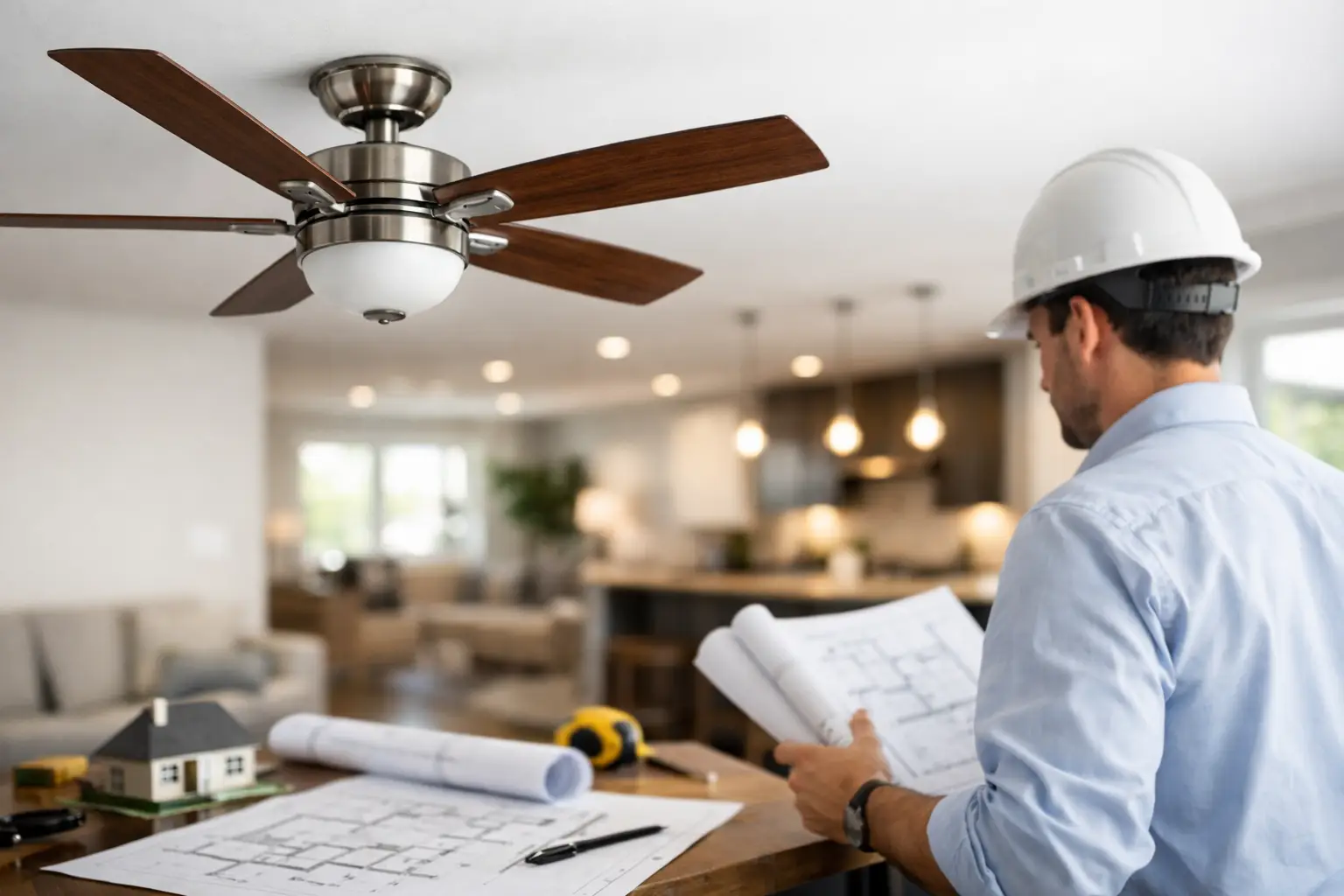
A ceiling fan gets noticed twice on a project – at install and at showing. If it goes in fast, runs quietly, and looks right for the room, nobody complains. If it wobbles, underperforms, or fights the lighting plan, it creates delays, callbacks, and a cheap first impression. That is why a solid ceiling fan buying guide for builders matters more than most finish decisions.
For builders, designers, and investors, the fan is doing three jobs at once. It has to move air effectively, fit the electrical and ceiling conditions on site, and support the design story of the property. Miss one of those, and the fan becomes a visible compromise. Get all three right, and it reads as a smart spec that improves comfort and perceived value without blowing the budget.
Why ceiling fan selection affects ROI
Fans sit in a useful middle ground between utility and style. They are more visible than a switch plate but less expensive than a kitchen appliance package. That makes them one of the better places to create an upgrade feel without a major line-item increase.
In a flip or rental turn, the right fan can also reduce common buyer objections. Bedrooms that feel stuffy, great rooms that look underlit, or covered patios that seem unfinished all benefit from a well-chosen unit. Buyers read those details quickly. A builder-grade fan that hums or looks undersized signals corners were cut elsewhere. A quiet, proportional fan with a clean finish makes the room feel considered.
There is also a labor angle. Standardizing on a few reliable models across project types can cut install time, reduce compatibility mistakes, and simplify replacement parts. That matters when crews are moving fast and schedules are tight.
Start with room function, not finish
The most common spec mistake is choosing by look first and performance second. In a staged listing photo, finish matters. In lived-in use, airflow, blade span, and light output matter more. Start with the room’s purpose, then narrow the style.
In bedrooms, quiet operation and simple controls usually matter most. In large living areas, blade span and downrod flexibility become critical because ceiling height and square footage vary. On covered outdoor spaces, damp or wet rating is non-negotiable. A fan that looks perfect indoors but fails on a porch is not a bargain.
Think about how the room will actually be used. A vacation rental may need remote controls that guests can understand in seconds. A multifamily project may benefit from pull-chain simplicity if replacement and maintenance are a concern. A custom build may justify integrated smart controls, but only if the electrical plan and homeowner expectations support them.
Size is where most fan specs go wrong
If a fan is too small, the room feels stagnant. If it is too large, it can overpower the ceiling plane visually and create awkward clearance issues. Builders should treat fan sizing as a performance and proportion decision.
For smaller bedrooms or offices, compact blade spans often work best. Standard secondary bedrooms usually land in the mid-range. Open-concept living rooms, vaulted family spaces, and large primary suites often need larger spans or even multiple fans instead of one oversized unit. That last point matters. Two properly placed fans can distribute air better than one central fixture trying to do too much.
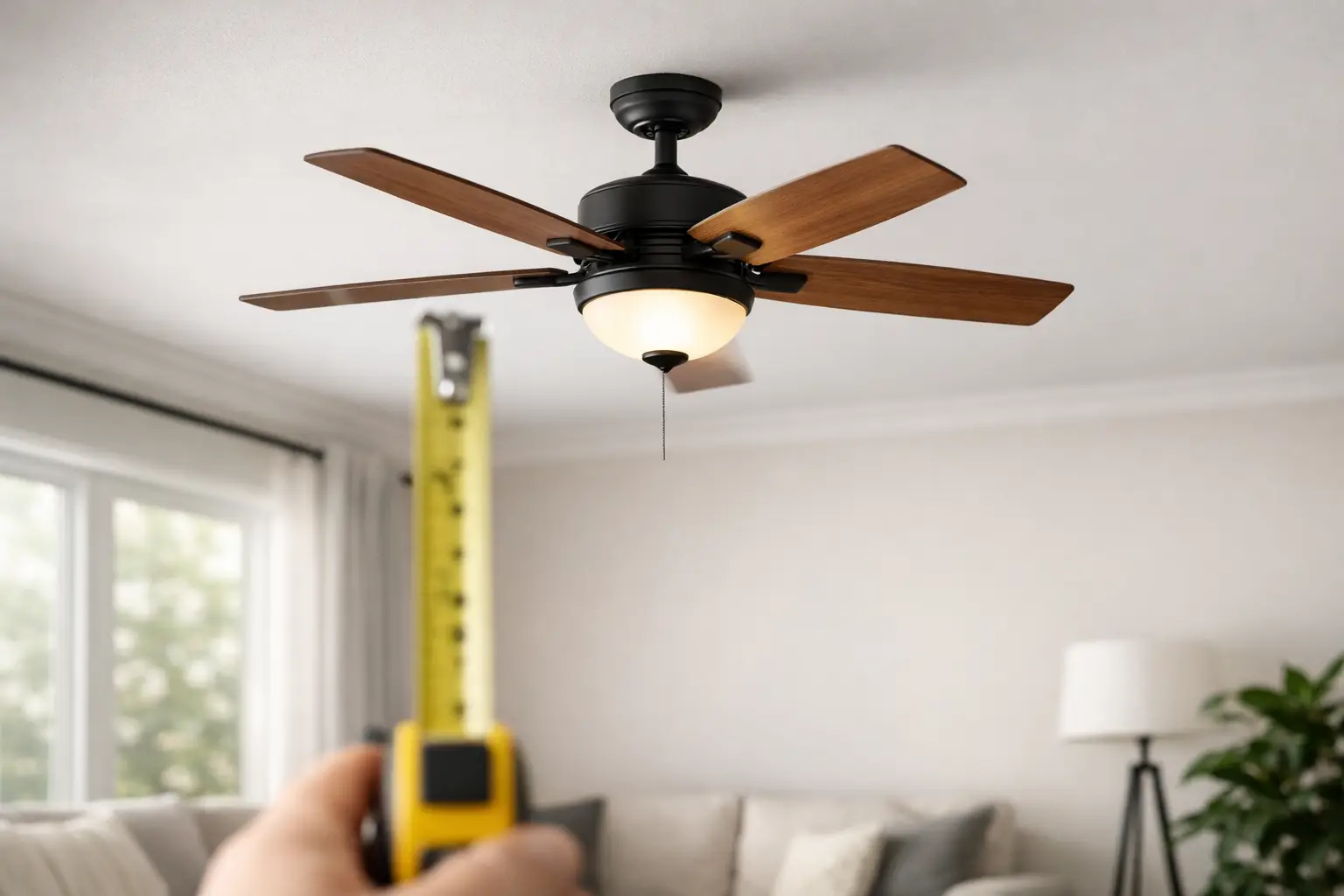
Ceiling height changes the equation. A fan mounted too high loses practical airflow at occupant level. Too low, and it creates safety and code concerns. Downrod options are not an afterthought. They are part of the original spec. On sloped ceilings, confirm mounting compatibility before the order goes out, not when the electrician is already on site.
Airflow numbers to watch
CFM, or cubic feet per minute, is the quickest performance check. Higher is generally better for larger rooms, but not every project needs the highest possible number. A bedroom fan can prioritize quiet comfort over max output. A covered patio in a hot climate may need stronger airflow to feel useful.
Also look at motor quality, not just marketing claims. A fan with decent CFM and a reliable motor often outperforms a flashy model that looks good in a catalog but creates noise issues after installation.
Builder-friendly features that save time on site
The best fan for a builder is not always the cheapest one. It is the one that installs cleanly, has clear instructions, and does not generate return visits.
Integrated LED kits can reduce fixture coordination, but only if the color temperature matches the rest of the house. A cool white fan light in a warm-toned home instantly feels off. For most residential projects, consistency across the lighting package matters more than squeezing out a minor upfront savings.
Quick-install blade systems, preassembled parts, and dependable balancing hardware are worth paying for when labor is expensive. Remote control modules can be helpful, but they add another failure point if quality is low. Wall controls are often cleaner for owner-occupied homes, while hand-held remotes may suit high ceilings or retrofit situations.
Reversible motors are another practical feature, especially in mixed climates. They are not glamorous, but they add year-round usability. That is the kind of spec detail that makes a product feel better thought out.
The ceiling fan buying guide for builders: key spec checks
Before approving a fan package, check five things together: room size, ceiling height, light output, control type, and rating for location. Most project issues come from one of these being overlooked.
Room size tells you the blade span range. Ceiling height determines flush mount versus downrod. Light output matters if the fan is replacing a dedicated fixture rather than supplementing recessed cans. Control type affects electrician workflow and end-user satisfaction. Damp or wet rating decides whether the fan belongs in a bath-adjacent area, patio, or standard interior room.
This is also where designers and builders need to sync early. A designer may want a sculptural fan with a distinct blade shape, but if lead times are long or installation is complicated, that choice may not fit the job schedule. The best specs hold both aesthetic intent and project reality.
Finish selection that supports resale
Matte black remains a safe performer because it bridges modern farmhouse, transitional, and newer coastal palettes. Brushed nickel still works in practical mid-market projects, especially when the rest of the hardware package leans cool. White fans disappear nicely into low ceilings and simpler trims, which can help smaller rooms feel cleaner.
Wood-look blades add warmth, but they need to coordinate with the flooring and millwork story. Too many competing wood tones can make a room feel busy instead of elevated. In flips, neutral usually wins. In custom homes or designer-led renovations, a stronger finish can be worth it if it reinforces the broader materials package.
Where builders overspend and where they should not cut corners
Overspending usually happens when every room gets treated like the primary suite. Not every secondary bedroom needs a statement fan with advanced controls. Standardize practical models for repeat spaces, then upgrade selectively in the entry, family room, primary, and outdoor entertaining zones.
Cutting corners usually backfires on motor quality, noise performance, and lighting consistency. A cheap fan that clicks, hums, or flickers costs more once you factor in labor, warranty headaches, and buyer perception. This is especially true in spec homes and flips, where buyers are alert to signs of rushed work.
There is also a sourcing lesson here. Bulk ordering a small family of proven models often beats chasing one-off deals. It simplifies replacement, reduces finish mismatches, and helps crews stay efficient. For pros sourcing through trade channels like Fan & Lights, that consistency can be just as valuable as a better unit cost.
Best-fit fan strategies by project type
For production builders, repeatability is the priority. Choose a compact lineup that covers standard bedroom, great room, and outdoor patio needs with consistent finish options. Keep install steps familiar and replacement access easy.
For interior designers, the fan should support the visual hierarchy of the room. In some projects, that means the fan disappears. In others, it acts as a sculptural ceiling element. Either way, confirm airflow and mounting details early so the design concept survives real-world installation.
For investors and flippers, focus on broad appeal and visible reliability. Quiet operation, integrated lighting, and neutral finishes tend to read best during showings. Buyers do not usually ask for fan specs. They notice when a room feels comfortable, bright, and finished.
Final checks before you place the order
Review lead times, carton dimensions, warranty terms, and whether replacement parts are easy to get. Confirm ceiling slope compatibility, downrod lengths, and color temperature. Make sure the electrician, designer, and purchasing lead are all looking at the same spec sheet.
The right ceiling fan is not just another fixture. It is a small decision that touches comfort, labor, staging, and resale value all at once. Spec it with the same discipline you bring to flooring transitions or cabinet hardware, and it will quietly do its job long after the punch list is closed. For your next project, choose fans that install clean, perform without drama, and make the room feel finished the moment a buyer walks in.







Leave a Reply