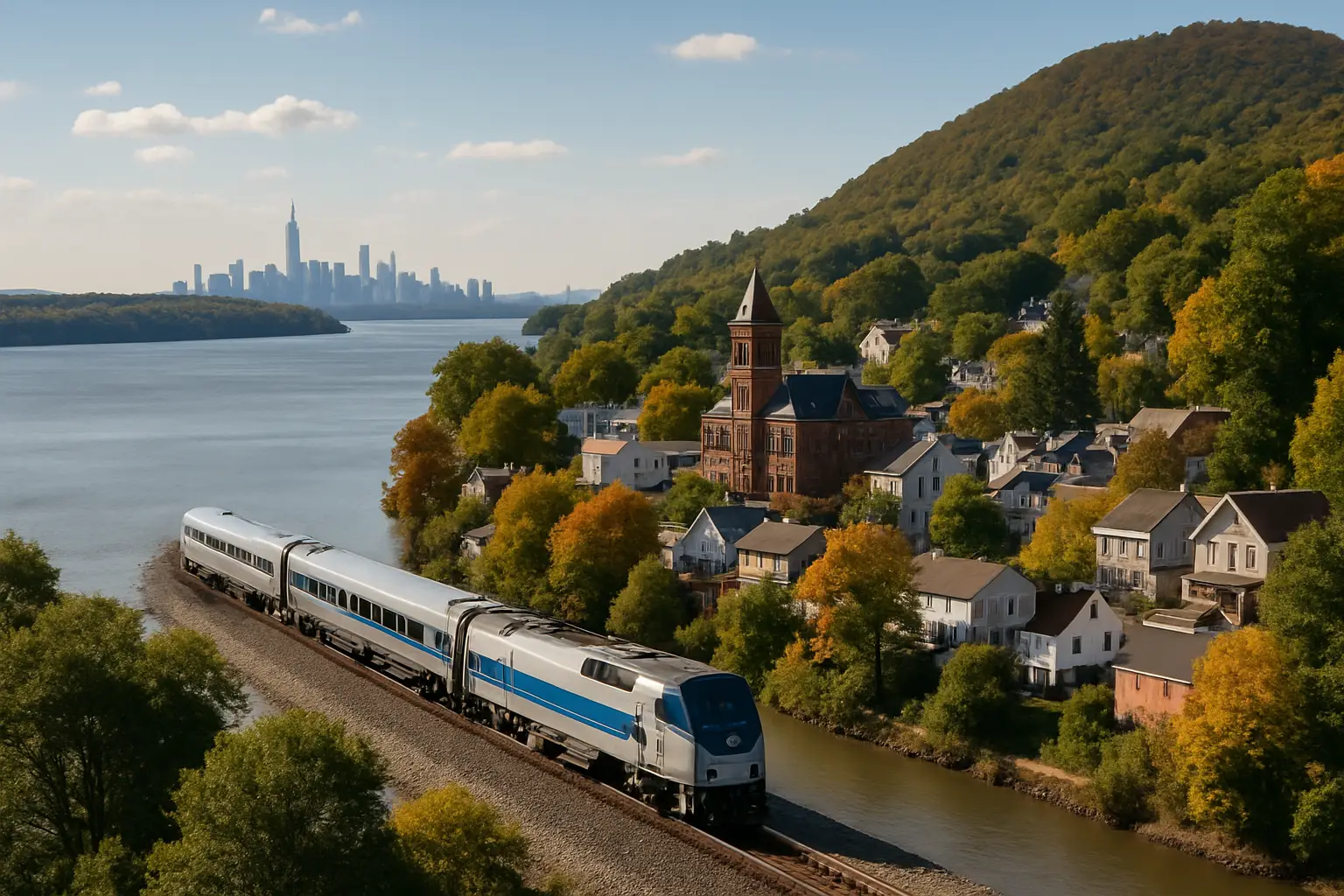
The fastest way to blow up a renovation schedule is to pick a Hudson Valley town that looks great on Instagram but adds 60-90 minutes of daily friction. For builders running multiple sites, designers juggling installs, or investors trying to hit a tight listing date, commute reliability is not lifestyle fluff – it is a line item. The right town keeps you close to labor, vendors, showings, and Manhattan money without forcing you into constant rescheduling.
If you are asking “which hudson valley town is best for commuting,” the real answer is: best for what kind of commute, to where, and on whose calendar. Train-to-Grand Central looks very different than a drive to White Plains, a loop of job sites across Rockland and Westchester, or a hybrid schedule that only needs two peak-day rides a week. Below is a town-by-town, pro-first breakdown with the trade-offs that actually affect ROI.
What “best for commuting” means for project pros
Commute math changes when time is revenue. A designer’s day can implode if Metro-North is delayed and you miss a two-hour install window. A GC loses margin when subs sit idle because inspections and deliveries are staggered. An investor loses momentum when they cannot pop up for a quick punch-list run.
So define your commute in three layers.
First, the primary destination. For many, it is Midtown Manhattan, but plenty of deal flow runs through White Plains, Stamford, Jersey, or the I-287 corridor.
Second, your tolerance for variability. A 70-minute train that is consistent can be easier than a 50-minute drive that turns into 90 when a bridge or parkway backs up.
Third, how the commute affects your product strategy. Towns with stronger train access often command a premium, but that can translate into faster resale velocity and better rent stability. Towns with car-first access can support larger footprints and value-add plays, but buyer pools may be narrower.
The short list: towns that win on commute performance
If you want a clean shortlist, these are the strongest commuting towns in the Hudson Valley for the widest range of schedules: Tarrytown, Beacon, and Cold Spring. Each has a train-centric spine, an “easy yes” downtown for tenants and buyers, and a market that understands the value of access.
Kingston, Newburgh, and Peekskill can work very well too, but they require more deliberate positioning around neighborhood selection, property type, and tenant profile.
Tarrytown: the speed-and-stability play
Tarrytown is the town you pick when you need to protect your calendar. It sits in that sweet spot where getting to Manhattan is straightforward, and getting to Westchester is even easier.
Why it stands out
Metro-North access is the headline. Express trains can make the ride to Grand Central feel manageable for regular commuters, and the station is integrated enough that tenants and buyers understand the value immediately. For project pros, you also get fast access to major highways for site loops.
Local hotspots and “client-ready” vibe
Tarrytown reads polished without feeling sterile. The waterfront and walkable blocks support the kind of lifestyle copy that sells listings and makes rentals feel premium. That matters if you are staging a flip and want your photos to tell a complete story.
Housing and real estate angle
You pay for the commute. That is not a problem if you underwrite it correctly. In Tarrytown, the value-add strategy tends to be execution-heavy rather than land-banking. Think tight scopes, high finish discipline, and upgrades that photograph well.
This is also a place where lighting specs pull their weight. Consistent trim packages, warm-dim LEDs, and clean ceiling fan selections can help you hit “turnkey” expectations without expanding labor hours.
Commute and accessibility
Best for: frequent Manhattan commutes, Westchester access, and schedule reliability. Trade-off: acquisition cost often compresses your margin unless you control scope creep.
Beacon: the hybrid commuter’s favorite
Beacon has become a go-to answer because it balances a real downtown with a commute profile that works for hybrid schedules.
Why it stands out
The train is the product. The station is a known asset, and the town has enough retail and food to support a full lifestyle pitch for renters and buyers. For investors, that usually means better demand resilience.
Local hotspots and weekend traffic
Beacon’s Main Street energy is not just tourism – it is proof of demand. That helps when you are underwriting exit velocity. It also means your projects need to be permit-clean and neighbor-friendly. Towns with high visibility tend to punish sloppy job sites.
Housing and real estate angle
Beacon can support both smaller cosmetic flips and longer-term holds. The most reliable ROI comes from “smart, not fancy” improvements: tight kitchens, durable floors, and lighting that makes spaces feel taller and more intentional.
If you are competing, spec packages that reduce install time matter. Standardized fixture families and ceiling fan options that avoid complex downrod math can keep you moving.
Commute and accessibility
Best for: hybrid NYC commuters, renters who want a walkable core, and investors who need consistent demand. Trade-off: popular streets and property types can spark bidding, and timelines may need padding.
Cold Spring: compact, premium, and schedule-sensitive
Cold Spring is small, beautiful, and premium. It is also less forgiving if you misjudge buyer expectations.
Why it stands out
The station-to-village dynamic is strong, and the town has a clear identity. That identity attracts a commuter who wants charm and is willing to pay for it.
Housing and real estate angle
Inventory can be limited, so deals often come from relationships, off-market opportunities, or properties that need a thoughtful update rather than a gut job. The most common mistake is overbuilding with trendy finishes that fight the historic character.
A better play is to modernize performance while keeping the visual language calm: refined paint palettes, period-friendly fixtures, and ceiling fans that disappear into the ceiling line while still delivering airflow for older homes with temperature swings.
Commute and accessibility
Best for: buyers who want a storybook town with a credible NYC connection. Trade-off: small-town constraints, limited comps, and fewer “plug-and-play” projects.
Peekskill: value potential with improving commute perception
Peekskill is often where pros look when they want more square footage and a lower basis but still need a train.
Why it stands out
It has a Metro-North station and a growing sense of momentum. The upside is real if you pick your micro-location carefully.
Housing and real estate angle
Peekskill can reward renovation discipline. Because pricing can be more approachable than the headline towns, you can sometimes afford bigger floorplan improvements or mechanical upgrades without destroying margin.
This is where durability-forward specs shine. Investors doing rentals should favor hard-wearing lighting finishes, easy-to-source replacement glass, and fans that balance performance and low callback risk.
Commute and accessibility
Best for: value-add plays that still need train access. Trade-off: perception varies block to block, so your exit depends on exact location and product fit.
Newburgh: big upside, but you must underwrite risk
Newburgh can pencil impressively on paper. It can also surprise teams that assume the commute story alone will carry the deal.
Why it stands out
You can access the train via the Newburgh-Beacon Ferry connection, and the area has real architectural inventory. For certain buyers and renters, that mix is compelling.
Housing and real estate angle
This is a strategy town. Neighborhood selection, security planning, and tenant profile need to be deliberate. If you are flipping, you are often selling a restoration narrative plus a lifestyle pitch, not just square footage.
Design choices should help remove friction for buyers. Good lighting is not decoration here; it is perception management. Bright, consistent illumination, layered lighting plans, and outdoor-rated fixtures that make entries feel safe can change how a home shows.
Commute and accessibility
Best for: investors seeking upside and willing to manage variables. Trade-off: commute involves more steps for many riders, and market variability is higher.
Kingston: great for region-wide access, less ideal for daily NYC
Kingston is a strong town – just not a clean answer for daily Midtown commuting for most people.
Why it stands out
It has real density, strong neighborhoods, and a scene that supports long-term demand. For builders and designers, there is also a practical advantage: a wider local ecosystem of trades and suppliers.
Housing and real estate angle
Kingston can support rentals, flips, and small multi projects, and it tends to reward good fundamentals. If your work is high quality, photos well, and reads “low maintenance,” the town’s buyer pool often responds.
Commute and accessibility
Best for: people commuting around the Hudson Valley, occasional NYC trips, and teams managing multiple upstate projects. Trade-off: daily NYC commuting is doable for some but not the most time-efficient choice.
How to choose the right town for your commute and your ROI
Instead of picking a town because it is trending, match it to your operating model.
If you need to be in Manhattan often, start with Tarrytown for speed and predictability, then Beacon and Cold Spring if your schedule is more flexible and you want lifestyle tailwinds.
If you want value-add margin and can handle micro-market research, Peekskill can be a smart basis play. Newburgh can work for teams that price risk correctly and execute cleanly. Kingston is excellent when your “commute” is a loop of job sites and vendor runs across the region.
One practical move that helps across all these towns: spec lighting and ceiling fans early, not at the end. Late fixture decisions create backorders, change orders, and rework that chew up the very commute time you are trying to protect. If you want more project-first guidance like this, the editorial team at Hudson Valley Review regularly covers Hudson Valley markets through a build-and-sell lens.
The closing thought to work with: pick your town the way you pick your subs. Optimize for reliability first, then price, then vibes – because the most profitable commute is the one that stops stealing hours from your schedule.









Leave a Reply